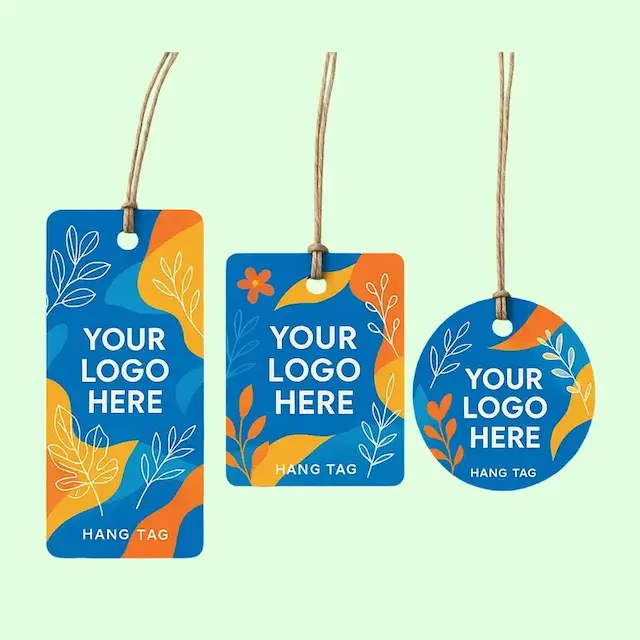
A hang tag is often the only branded thing attached to a garment when it reaches a shop floor. The label inside carries the size and the care instructions, but the tag carries the story, the price and the reason somebody should pick this item over the one next to it. We produce a lot of hang tag work at ZEE Packaging and this small piece of board does more selling than its size suggests.
It Carries The Whole Story
A hang tag is where a product explains itself.
- Price and barcode sit here rather than on a sticker
- Material and origin claims go where buyers actually look
- Brand story fits on the reverse where nothing else competes
- Care guidance beyond what fits on a sewn label
- Size, if the garment label is hidden inside
- It is the first branded thing a shopper touches on a rail
Most brands upgrading their hang tag see it lift perceived value straight away.
The Hole And The Attachment
Small details that decide whether it survives retail.
- An unreinforced punch tears within days on a busy rail
- An eyelet strengthens the hole considerably
- String, ribbon or a plastic barb each suit different products
- Cotton string reads natural, ribbon reads premium
- The hole should sit centered, or the tag hangs crooked
- Card caliper matters as much as the reinforcement does
- Standard rectangle the everyday hang tag
- Folded tag twice the printed surface
- Rounded corner version less prone to bending on a rail
- Die cut shape following a logo or a motif
- With an eyelet metal reinforcement around the hole
- Tented tag sitting over a folded item
Sizes We Print Regular
Every hang tag is built to your product, though these run often:
- 2" x 3.5" for the common standard
- 1.5" x 3" for a slim format
- 2.5" x 4" for a larger message area
- 2" x 2" for a compact square
- 3" x 5" for a folded tag opened flat
- 1.75" x 3.5" for a narrow tall format
Stock And Print
- 16pt to 24pt card stock depending on the feel you want
- Kraft board for a natural or artisan position
- White SBS where you want vivid color
- Uncoated stock, which suits handwritten pricing
- Foil stamping, which sits beautifully at this scale
- Blind deboss and emboss for texture without ink
Caliper is worth spending on. A thin hang tag curls on a rail within a week, which looks considerably worse than a plain design on heavier board.
Materials That Reduce Impact
- Recycled card stock, widely available in these grades
- FSC certified paper, certificate available on request
- Soy based ink through the whole run
- Cotton or jute string rather than a plastic barb
- Uncoated stock, which recycles cleanly without film
- Seed paper tags, which get planted rather than binned
How Your Order Runs With Us
- 100 unit minimum, so a small label can order properly
- Free proof before anything prints
- Free artwork setup by our own designer
- Physical sample on request, since caliper is hard to judge on screen
- Urgent turnaround at 5 to 8 business days
- Free shipping worldwide with nothing hidden
Frequently Asked Questions
How much do hang tags cost?
Rough estimate is $0.03 to $0.10 per unit plain, $0.05 to $0.15 with one color print and $0.10 to $0.28 with foil or an eyelet at moderate quantity. Volume moves it. Shipping is included in our price. This is estimate only, so ask our team for a exact quote.
Will the hole tear?
Not with reinforcement or an eyelet. An unreinforced punch on thin card is the most common failure we get shown.
Do you supply string?
We do, in cotton, jute or elastic. Plastic barbs are available too, though most brands now prefer a natural fiber.
Which caliper should we use?
16pt for a light tag, 24pt where you want it to feel substantial. Thin card curls on a rail quickly.
Can we print both sides?
Yes, and the reverse is worth using. Brand story and care details read better there than crammed onto the front.
Kraft or white stock?
Kraft for natural and artisan positioning, white where your artwork needs bright color reproduction.
Can you do a custom shape?
We do, following a logo or a motif. There is a small one off tooling cost for the die.