Custom Thank You Cards
Almost nothing that arrives in an online order is personal. Everything is automated, printed by a machine and addressed by an algorithm. A card in the box breaks that pattern, particularly one with a handwritten line on it. We produce a lot of thank you card work at ZEE Packaging and the response it generates is disproportionate to what it costs.
A Human Moment In An Automated Process
A thank you card interrupts an otherwise impersonal transaction.
- Everything else in the parcel came off a production line
- A card suggests somebody actually noticed the order
- Handwriting on it lifts the effect enormously
- It costs a fraction of any other loyalty gesture
- Customers photograph them and post them regularly
- It arrives at the exact moment somebody feels positive
Most brands adding a thank you card see reviews mentioning it within the first week.
What Actually Goes On It
The content matters as much as the card itself.
- A short message, since nobody reads a paragraph here
- Space left blank for a handwritten line
- A discount code encouraging a second order
- A QR code to a review page or a socials link
- Care or usage instructions where they genuinely help
- The brand name, quietly rather than dominating
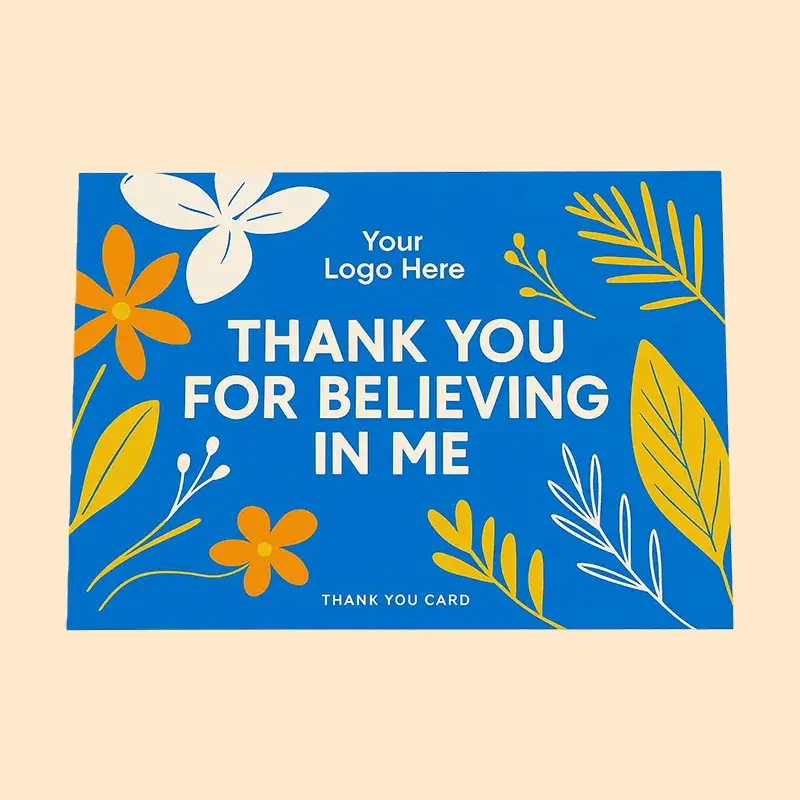
- Flat card the simplest thank you card we run
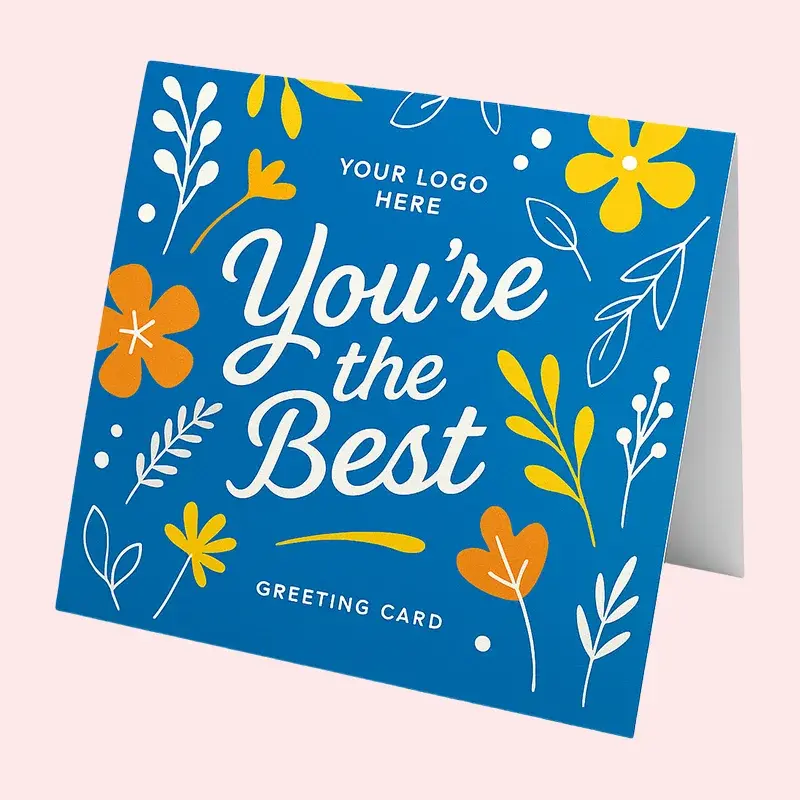
- Folded card four printed faces with room to write inside
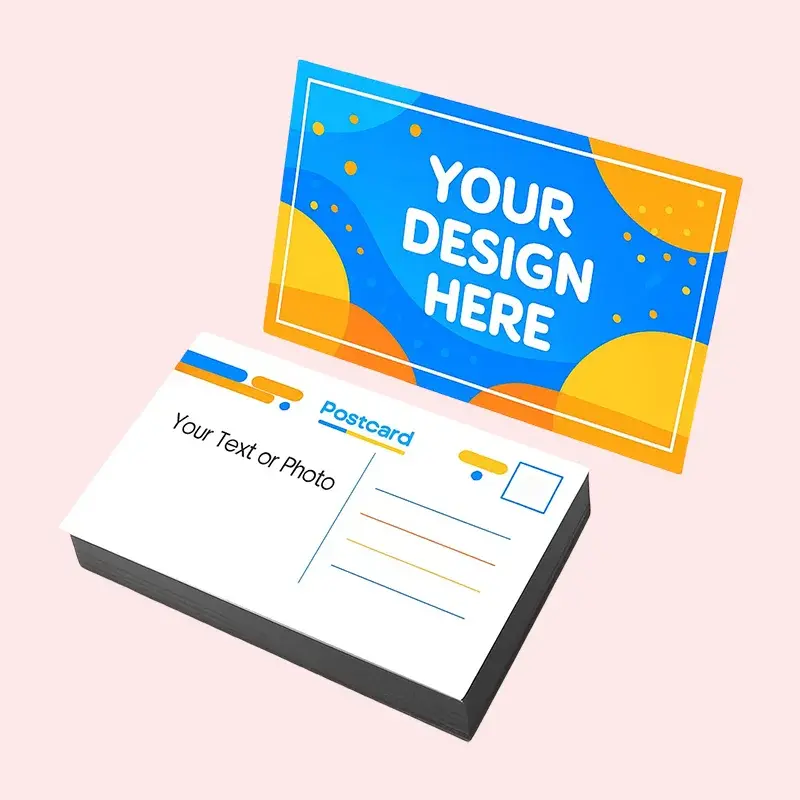
- Postcard style printed both sides, no fold
- Mini card a compact insert for small parcels
- Square format distinctive in the box
- Die cut shape following a logo or a motif
Sizes We Print Regular
Every thank you card is built to your packaging, though these run often:
- 3.5" x 5" for a standard insert
- 4" x 6" for a larger message
- 2" x 3.5" for a mini card
- 5" x 5" for a square format
- 4" x 5" folded, opening to 8" x 5"
- Custom sizes matched to your mailer
Size it to sit visibly on top rather than slipping down beside the product, where it gets missed entirely.
Stock And Print
- 14pt to 18pt card stock for a substantial feel
- 16pt as a sensible everyday standard
- Uncoated stock, which takes handwriting properly
- Kraft board for a natural or handmade position
- Matte lamination where you are not writing on it
- Foil stamping for a small premium detail
Uncoated is what we would recommend almost every time here. A laminated thank you card resists pen ink, which removes the handwritten element entirely.
Materials Worth Choosing
- Recycled card stock, widely available in these grades
- FSC certified paper, certificate available on request
- Soy based ink through the whole run
- Uncoated stock, which recycles cleanly with no film
- Seed paper cards, which get planted rather than binned
- Right sizing so almost no material is used per unit
How An Order Runs Through Here
- 100 unit minimum, so a small brand can start
- Free proof before anything prints
- Free artwork setup by our own designer
- Physical sample on request to test the pen ink
- Urgent turnaround at 5 to 8 business days
- Free shipping worldwide with nothing hidden
Frequently Asked Questions
How much is a thank you card?
Rough estimate is $0.04 to $0.12 per unit on 14pt, $0.07 to $0.18 for a folded card and $0.14 to $0.32 with foil at moderate quantity. Volume moves it. Shipping is included in our price. This is estimate only, so ask our team for a exact quote.
Should we handwrite them?
Where volume allows, definitely. A handwritten line is what separates a card from another printed insert.
Coated or uncoated?
Uncoated, since laminated card resists pen ink. That single detail decides whether handwriting is possible at all.
Should we add a discount code?
It works well, and it also lets you measure whether the card is driving repeat orders.
How big should it be?
Large enough to sit visibly on top of the product. Small cards slip down the side and get thrown out with the packaging.
Can we do seed paper?
We can. Customers plant them, which turns a disposable card into something they remember.
Can each card be different?
Yes, digitally. Names or order numbers can print individually if your system can supply the data.