Custom Blister Cards
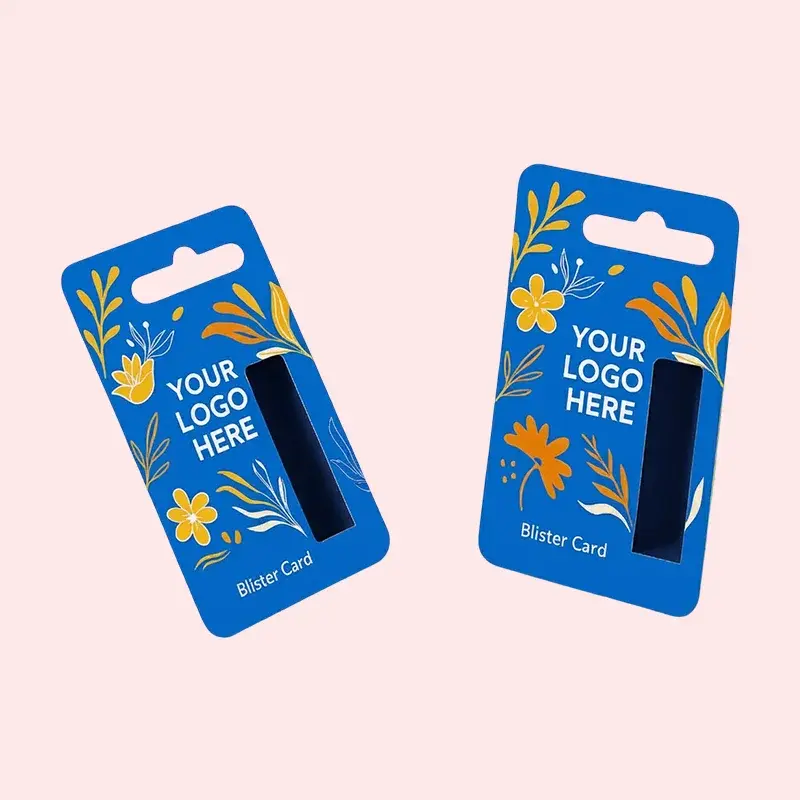
A blister card does two jobs at once. It shows the product clearly through a formed plastic shell and it seals it so nobody can lift it off a peg in a store. Retail buyers ask for it constantly, and for good reason. We produce a lot of blister card work at ZEE Packaging and the printed board is where our part of the job sits.
Visibility Plus Security
A blister card lets shoppers see without touching.
- The product stays fully visible behind a clear shell
- It cannot be removed without visibly damaging the pack
- Retailers accept it for open display where loose stock is refused
- The card carries branding, instructions and a barcode
- It hangs on a peg, using shelf space efficiently
- Theft is far harder than with an open format
Most retailers requiring a blister card do so because it survives an unsupervised display.
The Card Does More Than It Looks
Board specification decides whether the pack performs.
- The blister seals to a heat sealable coating on the card
- That coating has to cover the full seal area
- A stiff card stops the pack flexing and breaking the seal
- Reinforcement around the hang hole is essential
- Heavier products need a thicker caliper underneath
- The seal area must be clear of any varnish or lamination
- Face seal card the standard blister card format
- Full face seal the blister covering the whole card front
- Trapped blister sandwiched between two printed cards
- Clamshell insert card sitting inside a folded shell
- Skin packed card film drawn tight over the product
- With a euro hole for peg display
Sizes We Print Regular
Every blister card is built to your product, though these run often:
- 4" x 6" for small tools and accessories
- 5" x 8" for mid size products
- 6" x 9" for larger items
- 3" x 5" for compact goods
- 7" x 10" for bulkier products
- 8" x 12" for oversized formats
Send us the blister tooling dimensions, since the seal flange determines how much card you need around the product.
Stock And Print
- 20pt to 28pt card stock depending on product weight
- Heat sealable coating across the full seal area
- White SBS for vivid retail print
- Kraft board where a natural position suits the brand
- Matte lamination outside the seal area only
- One or two color flexo for high volume runs
Card stiffness is worth spending on. A flexing blister card breaks its own seal, which is the failure retailers notice first.
Choices That Reduce Plastic
- Paperboard tray instead of a plastic blister where weight allows
- Recycled card stock, widely available in these grades
- FSC certified paper, certificate available on request
- Soy based ink through the whole run
- Skin packing, which uses less film than a formed blister
- Right sizing so no card or film is wasted
Plastic reduction is the direction the whole category is moving. Where a product is light enough, a die cut board tray behind a printed card performs just as well.
How An Order Progresses Here
- 100 unit minimum, so a small brand can order properly
- Free proof before anything prints
- Free artwork setup by our own designer
- Physical sample on request to test the seal
- Urgent turnaround at 5 to 8 business days
- Free shipping worldwide with nothing hidden
Frequently Asked Questions
Do you supply the blister too?
We print the card and can arrange forming and sealing alongside it, so the whole pack comes from one place.
Why does the seal fail?
Usually a missing or interrupted heat sealable coating, or a card too thin and flexing. Both are avoidable at spec stage.
Which caliper should we use?
20pt for light items, 28pt for anything with real weight. A sagging card breaks the seal over time.
Will the hang hole tear?
Not when reinforced, which we do as standard. Sealed packs are heavier than plain cards, so it matters more here.
How much is a blister card?
Rough estimate is $0.06 to $0.18 per card plain, $0.10 to $0.28 with one color print and $0.16 to $0.40 for full color on heavier stock at moderate quantity. Volume moves it. Shipping is included in our price. This is estimate only, so ask our team for a exact quote.
Can we avoid plastic entirely?
For lighter products, often yes. A die cut board tray behind a printed card works well and retailers increasingly prefer it.
Can it be printed both sides?
Yes, and the back is worth using for instructions and specifications that buyers actually read.