Custom Postcards
A postcard has no envelope to open, which means the message is already visible when somebody picks it up. There is no decision about whether to bother reading it. That single structural quirk is why direct mail still uses the format and why it outperforms sealed mail on response. We produce a lot of postcard work at ZEE Packaging and the format keeps proving itself.
No Envelope To Get Past
A postcard is read whether the recipient intended to or not.
- The message is visible the moment it is picked up
- No decision about opening, since there is nothing to open
- It cannot be filed unread the way a sealed letter can
- Postage rates are lower than for enveloped mail
- Production is cheaper, with no envelope to buy or fill
- Response rates hold up well against more expensive formats
Most businesses running direct mail choose a postcard because the cost per response works out better.
Two Sides, Two Different Jobs
The front and back are not interchangeable.
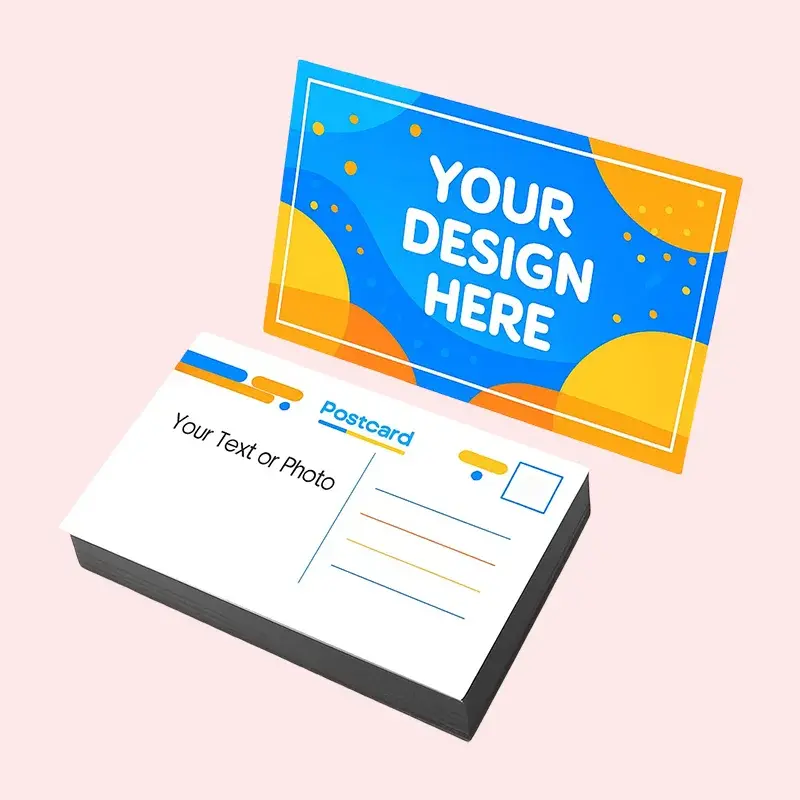
- The front carries the image and stops somebody discarding it
- The back holds the message, the offer and the call to action
- Address space has to stay clear for the carrier
- A dividing line keeps the message side readable
- Uncoated backs take a handwritten note properly
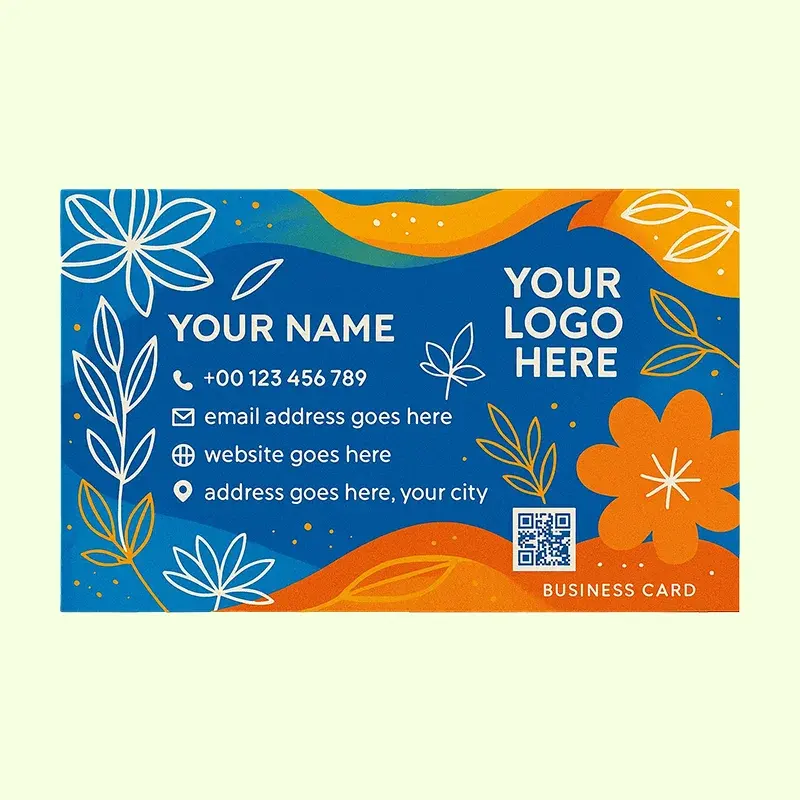
- QR codes work well on the back for tracking response
- Standard rectangle the everyday postcard we run
- Oversized format larger than standard for standout
- Square postcard distinctive in a stack of mail
- Rounded corner version softer and more durable
- Die cut shape following a logo or an outline
- Folded card extra printed area, unfolding to reveal
Sizes We Print Regular
Every postcard is built to your campaign, though these run often:
- 4" x 6" for the standard mailing size
- 5" x 7" for a larger format
- 6" x 9" for maximum impact in a mailbox
- 5" x 5" for a square format
- A6 at 105mm x 148mm for European mailings
- A5 at 148mm x 210mm for a bigger message
Stock And Print
- 14pt to 18pt card stock for direct mail
- 16pt as the everyday standard we would recommend
- Uncoated stock where somebody writes a message
- Gloss lamination on the image side for vivid color
- Matte lamination for a softer, more premium look
- Spot UV and foil for a promotional card that stands out
An uncoated back is worth specifying. A laminated reverse resists pen ink, which matters if anybody needs to write on it after printing.
Materials Worth Choosing
- Recycled card stock, widely available in these grades
- FSC certified paper, certificate available on request
- Soy based ink through the whole run
- Uncoated stock, which recycles cleanly with no film
- Aqueous coating rather than plastic lamination
- Right sizing so no board is wasted per card
What The Process Looks Like Here
- 100 unit minimum, so a small campaign can be tested
- Free proof before anything prints
- Free artwork setup by our own designer
- Physical sample on request before a large mailing
- Urgent turnaround at 5 to 8 business days
- Free shipping worldwide with nothing hidden
Frequently Asked Questions
Which size mails cheapest?
Usually 4" x 6", since it fits standard postcard rates. Larger sizes stand out more but cost more to send.
Can we write on them?
Only on an uncoated back. Laminated reverses resist pen ink, which catches people out after printing.
Should we laminate?
Gloss on the image side helps color pop. We would leave the back uncoated so it takes writing and addressing.
Which caliper should we pick?
16pt for direct mail, since thinner card arrives creased through a sorting network.
Do you handle mailing?
We print rather than mail. Most clients use a mailing house alongside our production run.
Can we add a QR code?
Yes, and we would recommend it. It is the simplest way to actually measure what a campaign delivered.
How much is a postcard?
Rough estimate is $0.04 to $0.12 per unit on 14pt, $0.07 to $0.18 laminated and $0.14 to $0.35 with foil at moderate quantity. Volume moves it. Shipping is included in our price. This is estimate only, so ask our team for a exact quote.