Custom Pillow Boxes
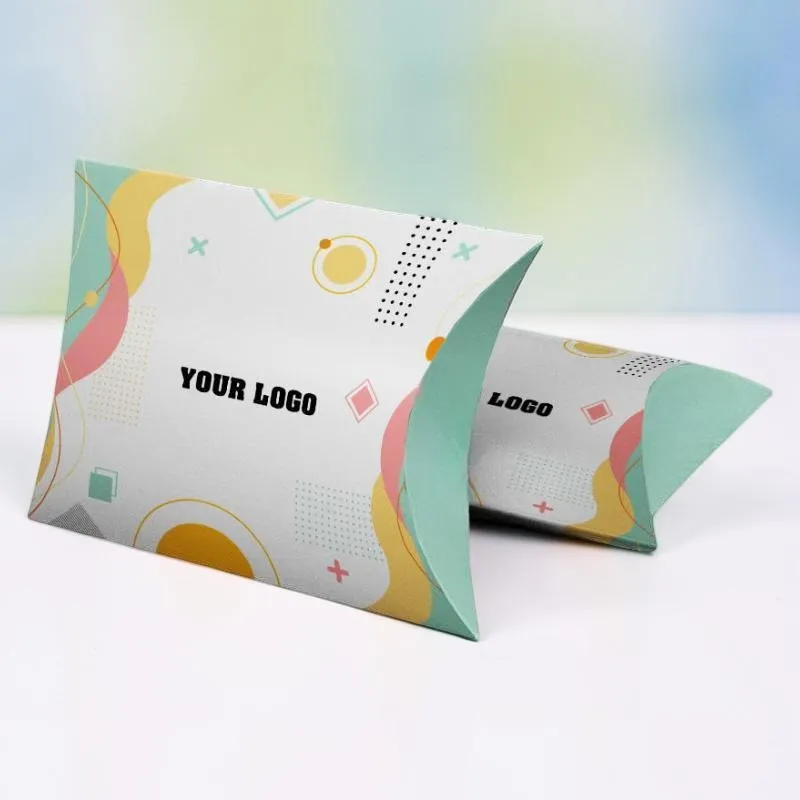
The curved ends are what make this format work. A flat sheet with two arced scores folds into a shape with no sharp corners, which reads soft and gift like rather than industrial. It also uses very little board. We produce a lot of pillow box work at ZEE Packaging and the shape does most of the selling by itself.
Curves Instead Of Corners
A pillow box gets its character from the arced ends.
- Two curved scores create the pillow shape when folded
- There are no sharp corners anywhere on the structure
- It reads soft and gift oriented rather than functional
- The whole thing folds from a single flat sheet
- No glue is needed, since the ends tuck closed
- It ships completely flat and folds in a second
Most brands choosing a pillow box want something that looks like a gift without costing like one.
What It Suits And What It Does Not
Being clear here saves a wrong choice.
- Flat and slim products work perfectly
- Jewelry, scarves, socks and accessories all suit it
- Sweets, favors and small gifts fit well
- Anything rigid and bulky does not, since the shape curves
- Heavy items pull the tucked ends open
- Fragile products need something with proper corners
- Standard tuck end the everyday pillow box
- With a die cut window showing the product inside
- With a hang hole for peg display
- Handle version a punched carry hole at the top
- Large format for scarves and bulkier soft goods
- Mini favor size weddings and party use
Sizes We Print Regular
Every pillow box is built to your product, though these run often:
- 4" x 3" x 1" for a small favor
- 6" x 4" x 1" for jewelry and accessories
- 7" x 5" x 1.5" for larger items
- 3" x 2" x 0.75" for a mini format
- 9" x 6" x 2" for scarves and soft goods
- 5" x 3" x 1" for a compact gift
Measure the thickness carefully, since the curve limits how much depth the format actually takes.
Board And Print
- SBS C1S at 14pt to 18pt for most formats
- Kraft board for a natural or artisan position
- Uncoated stock for a soft, tactile finish
- Matte or gloss lamination for durability
- Foil stamping, which suits the curved face nicely
- Window patching with PET or compostable film
Board choice affects the curve. Too stiff and it resists forming, too light and the ends will not hold closed properly.
Materials Worth Choosing
- Recycled board across most grades we run
- FSC certified stock, certificate available on request
- Soy based ink through the whole run
- No glue used, so the box recycles as one clean piece
- Compostable window film rather than PET
- Very little board used per unit by nature of the format
This is one of the lowest material formats we produce. A pillow box uses considerably less board than a comparable carton.
How An Order Runs With Us
- 100 unit minimum, so a small brand or event can order
- Free 3D mockup and flat proof before anything prints
- Free dieline drawn by our own designer
- Physical sample on request to check the fold and fit
- Urgent turnaround at 5 to 8 business days
- Free shipping worldwide with nothing hidden
Frequently Asked Questions
Will the ends stay closed?
On a correctly sized box, yes. Overfilling is what pushes the tucked ends open, so we size it to the product.
How much does a pillow box cost?
Rough estimate is $0.08 to $0.25 per unit plain, $0.14 to $0.40 with print and $0.22 to $0.60 with a window at moderate quantity. Volume moves it. Shipping is included in our price. This is estimate only, so ask our team for a exact quote.
How thick can the contents be?
Slim is best. The curve limits usable depth, so anything much over an inch or two struggles.
Do they arrive flat?
Completely, and they fold in about a second. Storage takes almost nothing at all.
Can we add a window?
Yes, patched with clear or compostable film. It works well for jewelry and confectionery.
Which board should we use?
14pt to 18pt suits most sizes. Too stiff and the curve resists forming properly.
Can it hang on a peg?
With a punched hole, yes, though we would reinforce it. The curved shape does hang slightly oddly.