Custom Backing Cards
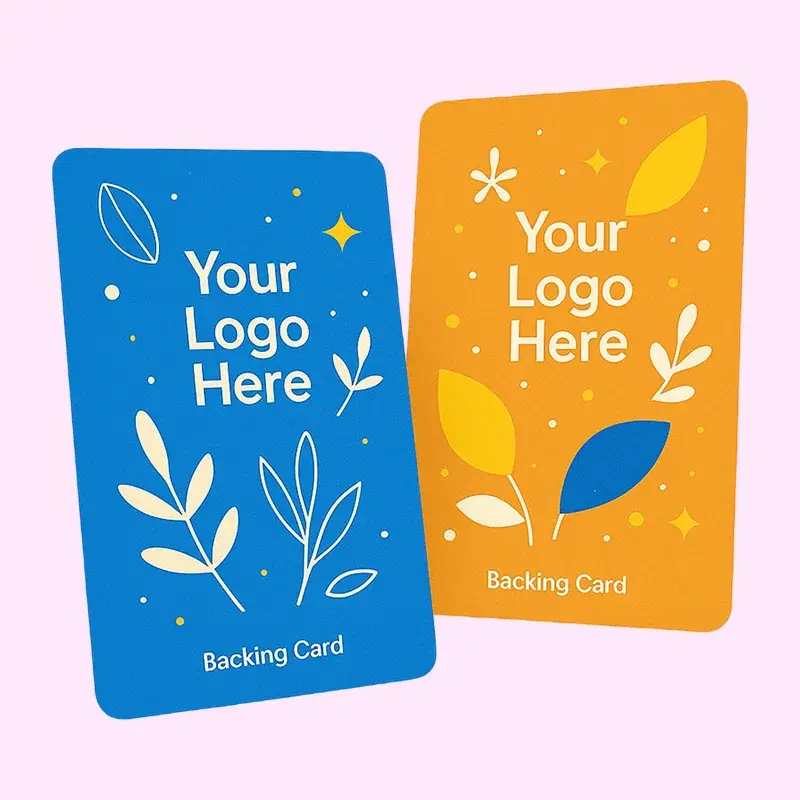
A backing card turns a loose item into a retail product. Without one, a pair of earrings or a hair clip looks like something from a market stall. With one, it hangs on a peg, carries a barcode and sits alongside branded competitors. That transformation costs very little. We produce a lot of backing card work at ZEE Packaging and this is one of the highest value items per penny spent that we make.
It Makes Something Retail Ready
A backing card gives a loose item structure and presence.
- The product hangs rather than sitting in a bowl
- There is somewhere to put branding, pricing and a barcode
- It stops small items getting lost in a display
- Stock control becomes far easier with a scannable card
- Retailers will not usually take unpackaged loose stock
- It costs a fraction of a box while achieving the same result
Most makers adding a backing card find stockists take them seriously for the first time.
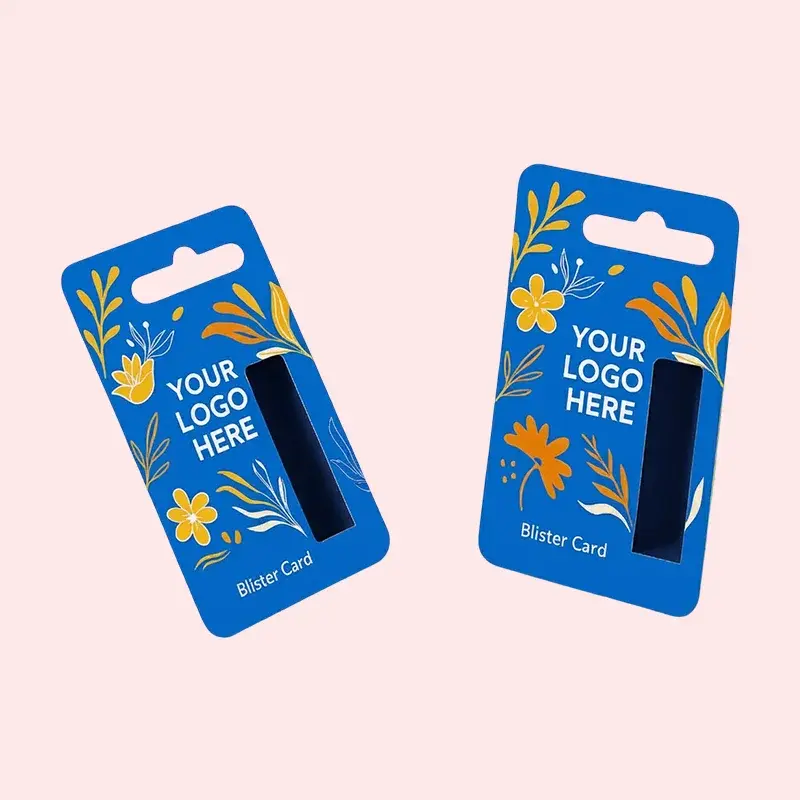
The Hang Hole Is The Weak Point
This is where the format fails if it fails at all.
- An unreinforced punch tears within days on a busy peg
- Card stiffness matters as much as the reinforcement
- Heavier products need a thicker caliper underneath them
- The hole should sit centered, or the card hangs crooked
- Euro hole is the standard shape most pegs expect
- We reinforce every punched hole as a matter of course
- Standard rectangle the everyday backing card
- Folded card printing on both faces with a hanging top
- With a die cut slot holding the product mechanically
- With punched holes for earring posts and similar
- Rounded corner version softer and less prone to bending
- Shaped die cut following a logo or a product outline
Sizes We Print Regular
Every backing card is built to your product, though these run often:
- 2" x 3" for earrings and small items
- 3" x 4" for jewelry and accessories
- 4" x 6" for larger products
- 2.5" x 2.5" for a compact square
- 3" x 5" for hair accessories
- 5" x 7" for bigger items
Send us the actual product, since slot and hole placement depends on how it sits rather than on dimensions alone.
Stock And Print
- 18pt to 24pt card stock depending on the product weight
- Kraft board for a handmade or natural position
- White SBS where you want vivid color
- Matte lamination, which resists scuffing on a busy display
- Uncoated stock for a softer, more artisan feel
- Foil and blind deboss for a premium look
Card stiffness is worth spending on. A flimsy backing card lets a heavier product sag forward, which looks poor on a peg.
Materials We Would Suggest
- Recycled card stock, widely available in most grades
- FSC certified paper, certificate available on request
- Soy based ink through the whole run
- Uncoated stock, which recycles without any film
- Seed paper and specialty options where relevant
- Right sizing so no board is wasted around the product
What The Process Involves
- 100 unit minimum, so a market maker can order properly
- Free proof before anything prints
- Free artwork setup by our own designer
- Physical sample on request to check the product fit
- Urgent turnaround at 5 to 8 business days
- Free shipping worldwide with nothing hidden
Frequently Asked Questions
Will the hang hole tear?
Not when reinforced, which we do as standard. An unreinforced punch is the most common failure we get shown.
Which caliper should we choose?
18pt for light items, 24pt for anything with weight. A card that sags forward on a peg looks unfinished.
How much is a backing card?
Rough estimate is $0.03 to $0.10 per unit plain, $0.05 to $0.15 with one color print and $0.09 to $0.24 for full color at moderate quantity. Volume moves it. Shipping is included in our price. This is estimate only, so ask our team for a exact quote.
Can you punch holes to my product?
Yes, send us a sample. Hole spacing varies between designs and a generic punch rarely fits properly.
Should we add a sleeve?
For anything that gets handled a lot, yes. A clear or compostable sleeve keeps the card from scuffing.
Can you cut a custom shape?
We do, following a logo or a product outline. There is a small one off tooling cost for the die.
Kraft or white stock?
Kraft for handmade positioning, white where your artwork needs vivid color reproduction.