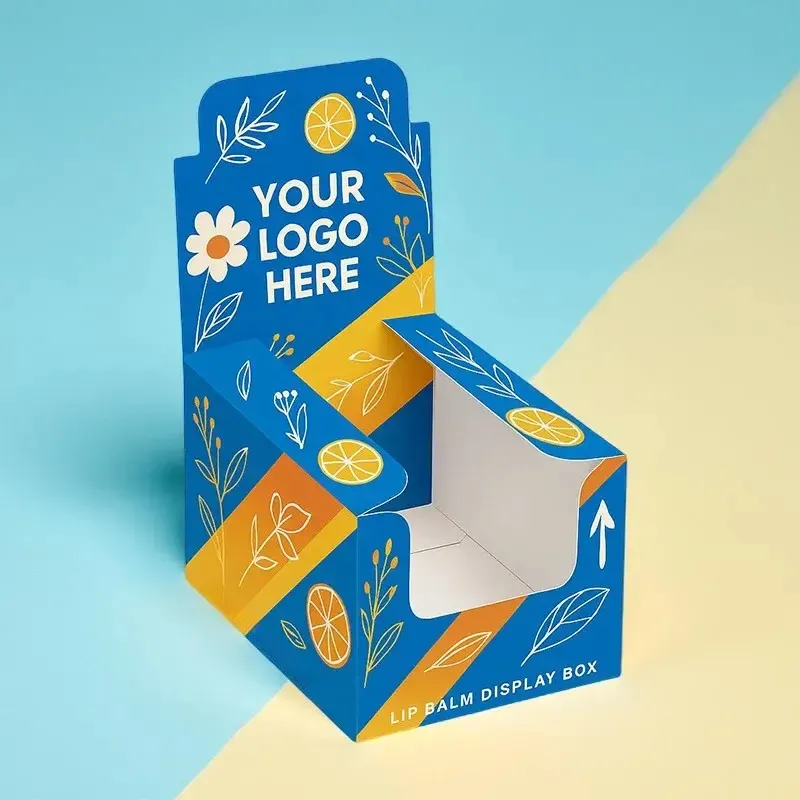
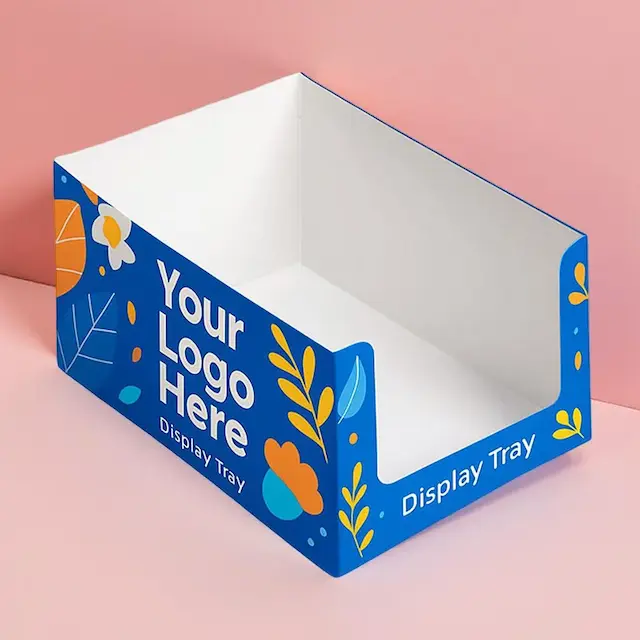
Custom Shelf Ready Display Tray
Supermarkets measure how long it takes to get a pallet of product onto a shelf, and that number decides which suppliers they favor. A tray that arrives filled, opens in one action and slides straight onto a shelf wins on that measure every time. We produce a lot of shelf ready display work at ZEE Packaging and store labor is what the whole format exists to reduce.
Store Labor Is The Whole Point
A shelf ready display removes work from a busy store.
- The tray arrives filled and sealed from your line
- One tear opens it into a presentable unit
- No unpacking individual items onto a shelf
- Staff handle one tray rather than twenty products
- The planogram is correct on arrival by definition
- Replenishment time drops considerably per facing
Most retailers requiring a shelf ready display do so because their replenishment costs justified it years ago.
Retailers Have Specifications
This is the one category where the customer sets the rules.
- Most major grocers publish their own SRP standards
- Tray dimensions must suit their shelf depth exactly
- Front panel height is usually specified
- Barcode placement and orientation are defined
- Perforation quality gets tested on acceptance
- Send us the retailer spec and we build to it
- Tray with a tear away lid the standard shelf ready display
- Wraparound with perforation case converting to a tray
- Two piece tray and hood lid lifting away entirely
- Front cut down tray product visible on the shelf
- Divided tray separating multiple SKUs
- Half pallet display larger shelf ready format
Sizes We Print Regular
Every shelf ready display is built to your product and the retailer's shelf, though these run often:
- 12" x 8" x 4" for a standard grocery tray
- 15" x 10" x 5" for a larger format
- 10" x 6" x 3" for a compact tray
- 16" x 12" x 6" for bulk lines
- 12" x 10" x 4" for a mixed SKU unit
- 8" x 6" x 3" for small items
Send us the retailer specification, since their shelf depth dictates the tray footprint entirely.
Board And Print
- B flute corrugated as the baseline for a filled tray
- Double wall where trays stack on a pallet
- Litho laminated corrugated for full color branding
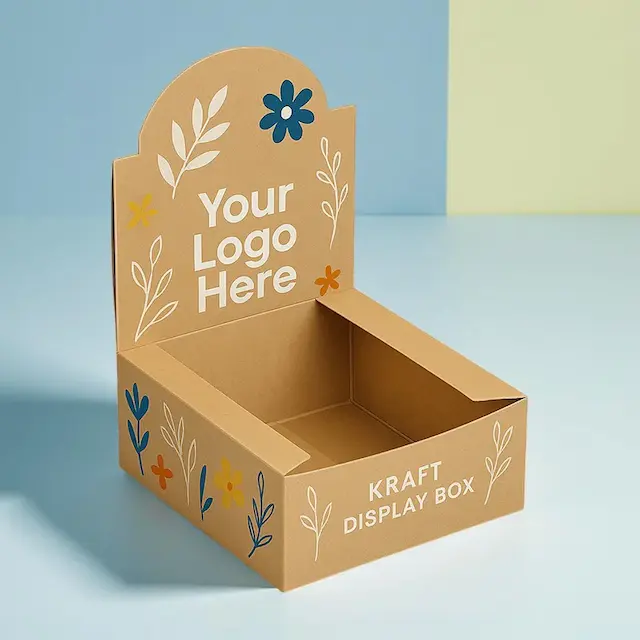
- Kraft corrugated where a plain tray is acceptable
- Reinforced front lip after the perforation is torn
- Tested perforation, which we sample at proof stage
A ragged tear is the fastest way to fail a retailer inspection. We test the perforation on the actual board rather than assuming it will work.
Materials That Reduce Waste
- Recycled corrugated, standard across these grades
- FSC certified board, certificate available on request
- Soy based ink through the whole run
- One pack doing transit and display together
- No lamination, so it recycles at store level easily
- Right sizing so pallets carry product rather than air
Combining transit and display packaging into one tray removes a whole layer from the supply chain, which is a genuine reduction.
What Ordering Involves Here
- 100 unit minimum, so a smaller supplier can meet a listing
- Free 3D mockup and flat proof before anything prints
- Free dieline drawn by our own designer
- Physical sample on request to test the tear and the load
- Urgent turnaround at 5 to 8 business days
- Free shipping worldwide with nothing hidden
Frequently Asked Questions
Do we need to follow a retailer spec?
If you are supplying a major grocer, yes. Send us their document and we build to it rather than guessing.
Will the perforation tear cleanly?
It will if specified properly, and we test it at proof. A ragged tear fails inspection immediately.
How much does a shelf-ready display cost?
Rough estimate is $0.60 to $1.50 per unit in plain corrugated, $1.00 to $2.40 with print and $1.80 to $4.00 for litho laminated at moderate quantity. Size moves it. Shipping is included in our price. This is estimate only, so ask our team for a exact quote.
Does it stack on a pallet?
Yes, with the right board grade. Double wall is usually needed where trays stack several high.
Can we print the tray?
Fully, through litho lamination. Retailers increasingly expect branding rather than a plain brown tray.
How much labor does it actually save?
Substantially. Staff place one tray rather than handling every individual product onto a shelf.
Can it hold mixed SKUs?
Yes, with dividers. Worth checking the retailer allows it, since some specify single SKU trays only.