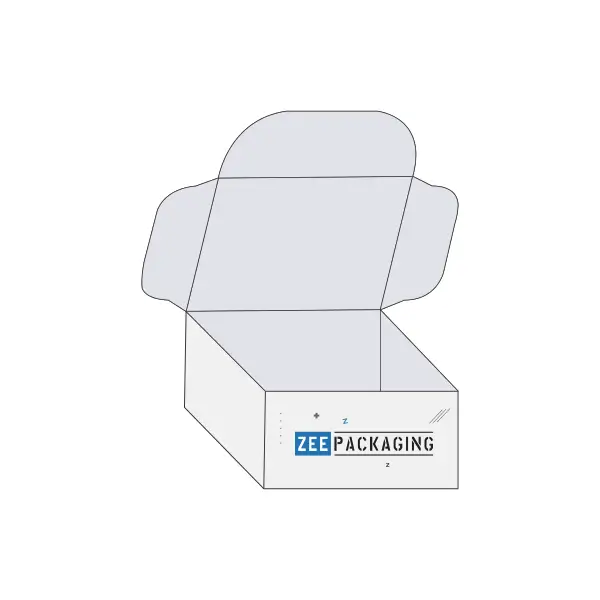
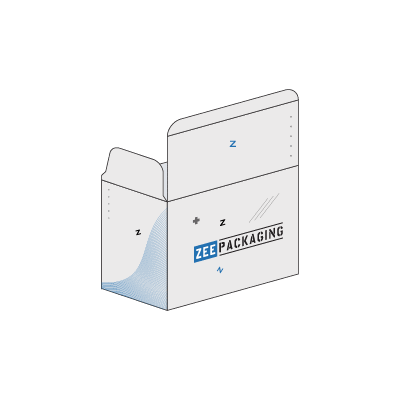
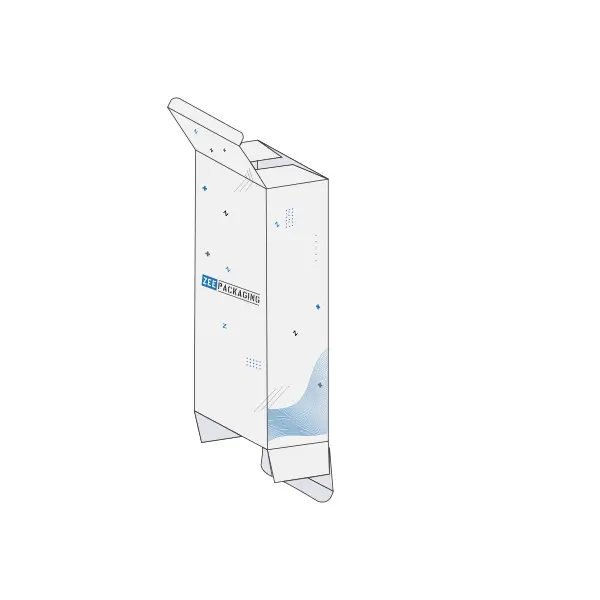
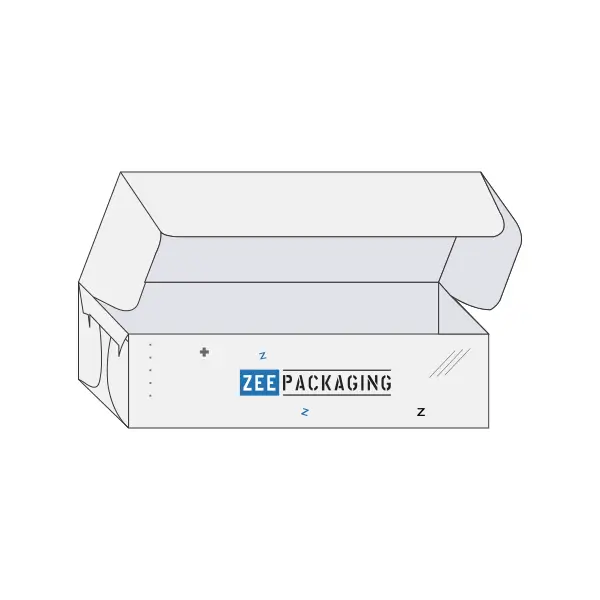
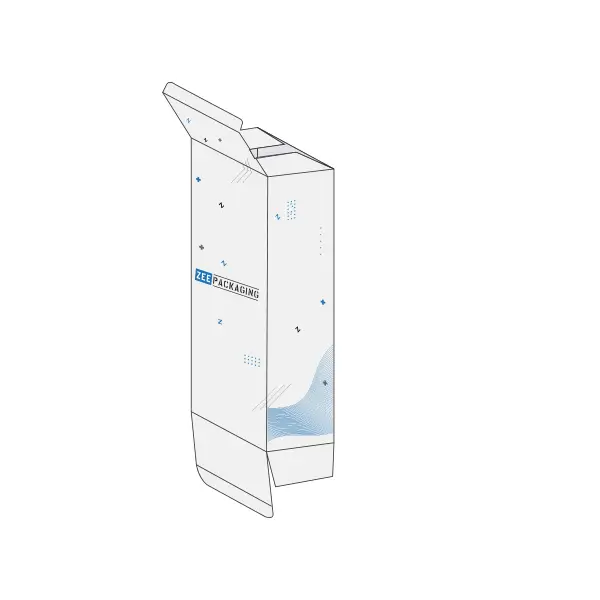
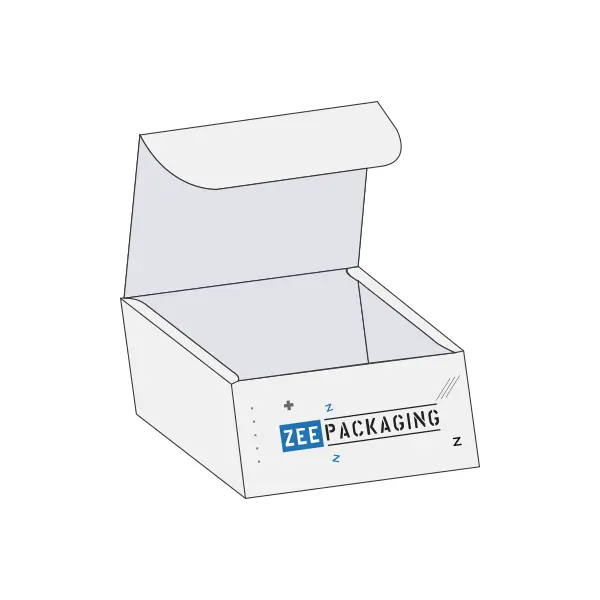
Custom Roll End Tuck Top
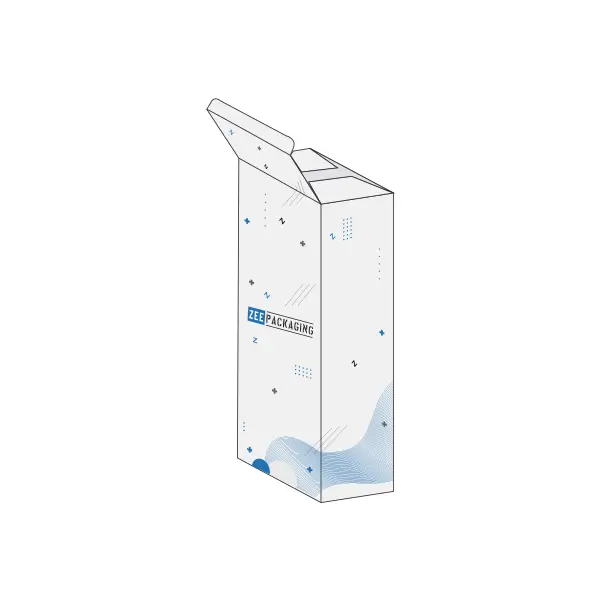
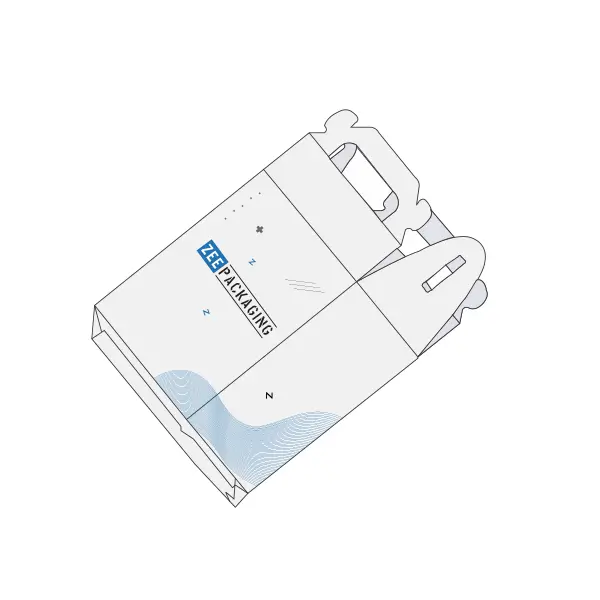
Most mailers close at the front. This one closes at the top, which changes how it gets filled and how it opens. The board rolls to form doubled side walls, then the lid folds over and tucks into the back panel rather than the front. We produce a lot of roll end tuck top work at ZEE Packaging and vertical loading is what makes it suit certain products better.
Closing From Above
A roll end tuck top loads and opens differently.
- Product drops in from the top rather than sliding in
- That suits bottles, jars and anything upright
- The lid folds over and tucks into the rear panel
- Rolled side walls give doubled thickness
- No tape or glue is needed anywhere
- It opens from above, which reads naturally to customers
Most brands choosing a roll end tuck top do so because their product loads better vertically than horizontally.
Tuck Depth Under Load
The closure has to hold through a courier network.
- A shallow tuck works loose under weight
- Deeper engagement survives handling and stacking
- Board caliper affects how the tab sits in its slot
- Rolled walls add thickness, changing the tolerance
- A ragged slot edge tears after repeated opening
- We sample the closure with your actual product weight
- Standard roll end tuck top the everyday build we run
- With a tongue lock resisting accidental opening
- With side flaps doubled end walls as well
- With a tear strip easier opening for the customer
- Window version showing product through a die cut
- Printed interior version branding on the inside face
Sizes We Print Regular
Every roll end tuck top is built to your product, though these run often:
- 4" x 4" x 8" for a bottle or tall item
- 6" x 6" x 6" for a cube format
- 8" x 6" x 4" for a standard order
- 10" x 8" x 6" for a mid size product
- 5" x 5" x 10" for a taller bottle
- 12" x 9" x 6" for larger goods
Send us the filled weight, since the tuck depth follows from it.
Board And Print
- E flute corrugated for lighter contents
- B flute where the product carries real weight
- Kraft corrugated for a plain economical build
- White corrugated where you want brighter print
- Litho laminated for full color across the surface
- One color flexo, the cheapest branded route
Top loading suits an automated line better than front loading. If you fill mechanically rather than by hand, this format usually runs faster on the line.
Materials Worth Choosing
- Recycled corrugated, standard across these grades
- FSC certified board, certificate available on request
- Soy based ink through the whole run
- No tape or glue, so recycling stays clean
- Paper void fill instead of plastic
- Right sizing so you ship product rather than air
What Ordering Involves Here
- 100 unit minimum, so a small brand can test the format
- Free 3D mockup and flat proof before anything prints
- Free dieline drawn by our own designer
- Physical sample on request to test the closure loaded
- Urgent turnaround at 5 to 8 business days
- Free shipping worldwide, including to your fulfillment center
Frequently Asked Questions
Tuck top or tuck front?
Top for products loaded vertically like bottles and jars. Front for flat goods that slide in horizontally.
How much is a roll end tuck top box?
Rough estimate is $0.35 to $0.90 per unit in plain kraft, $0.55 to $1.40 with one color print and $0.90 to $2.20 for full color at moderate quantity. Size moves it. Shipping is included in our price. This is estimate only, so ask our team for a exact quote.
Will the lid stay tucked?
At the right depth and board grade, yes. A shallow tuck under weight is what works loose in transit.
Do we need tape?
Not for the closure. Some operators add a strip for tamper evidence, though it is not structurally needed.
Does it suit an automated line?
Better than front loading, generally. Top filling runs faster on most mechanical systems.
Can we add side flaps?
Yes, which doubles the end walls too. Worth it for heavier products or longer transit routes.
Should we print inside?
We would say yes. The lid opens upward, putting the interior directly in view.