Custom Panel Hanger Snap Lock Bottom
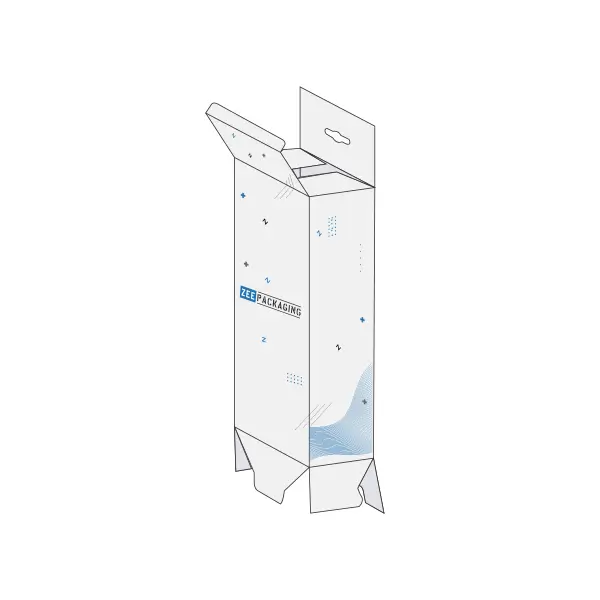
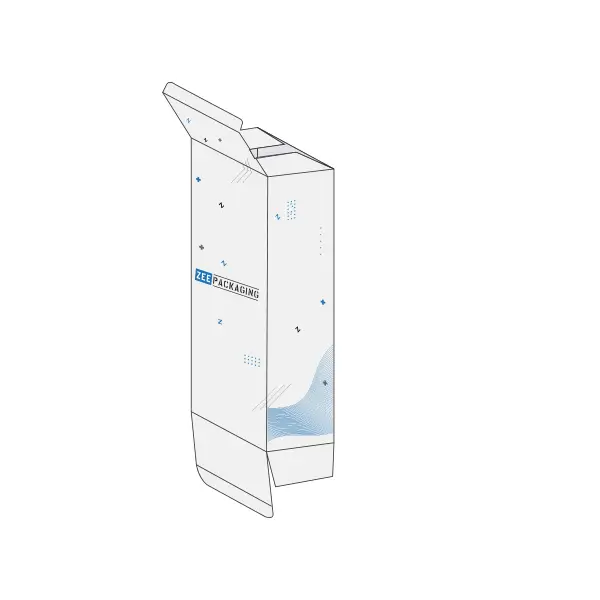
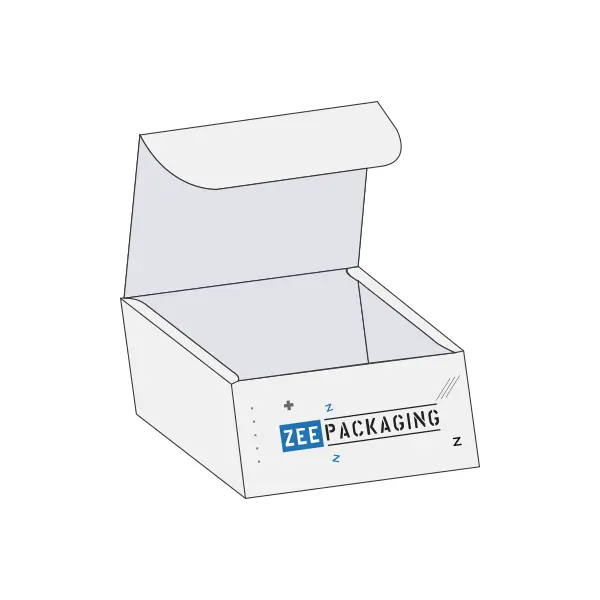
Two features on one carton, each solving a different problem. An extended panel above the product carries a punched hole for peg display, and a snap lock base folds into itself without needing glue. Neither adds a separate component or a production stage. We produce a lot of panel hanger snap lock bottom work at ZEE Packaging and the combination suits retail products with some weight.
Hanging Above, Locking Below
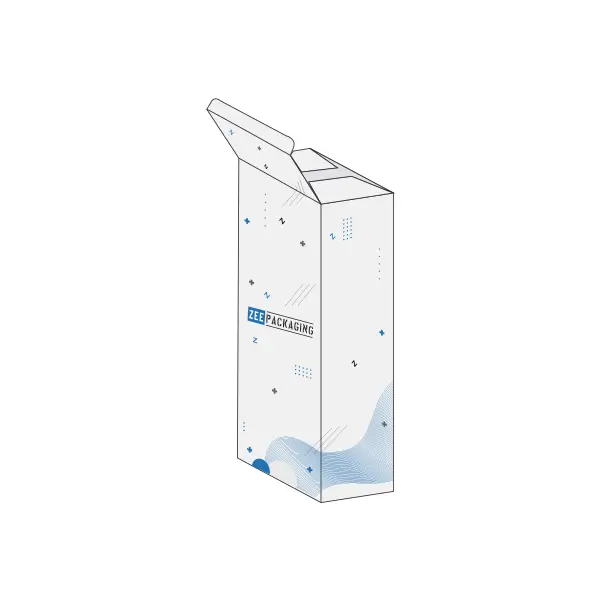
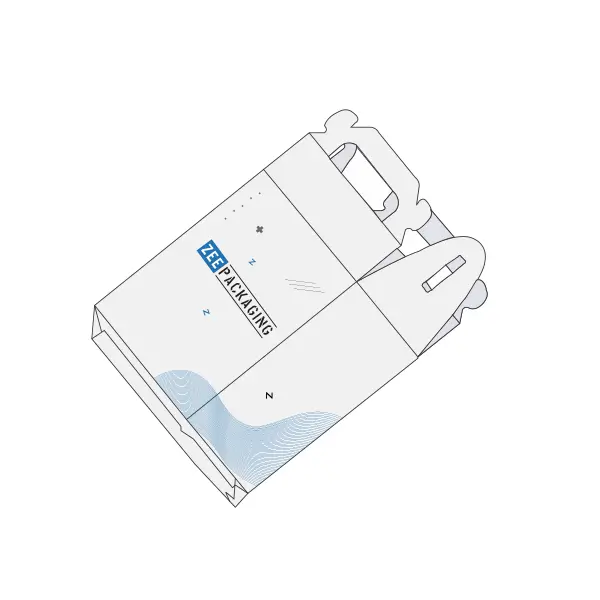
A panel hanger snap lock bottom handles display and base together.
- An extended panel sits above the product with a hang hole
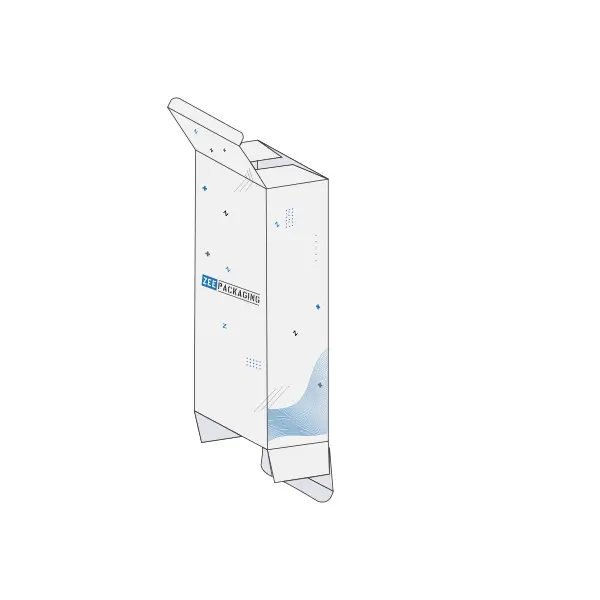
- The base folds in sequence and locks under tension
- No glue is applied anywhere in production
- The pack hangs on a peg or stands on a shelf
- It ships completely flat with nothing pre assembled
- Recycles as one clean piece with no adhesive
Most brands choosing a panel hanger snap lock bottom want peg display with a base stronger than a plain tuck.
Two Load Points To Get Right
Each feature carries weight differently.
- The hang hole takes everything when pegged
- The base takes everything when standing
- An unreinforced hole tears within days on a rack
- A snap lock base tightens under downward pressure
- Board caliper affects both features at once
- Send us the filled weight and we spec them together
- Standard panel hanger snap lock bottom the everyday build
- With a euro hole for standard peg racks
- Window version showing product through a die cut
- Shaped hanging panel following a logo outline
- With a die cut insert holding contents steady
- With a tongue lock top resisting accidental opening
Sizes We Print Regular
Every panel hanger snap lock bottom carton is built to your product, though these run often:
- 2" x 2" x 5" for a small item
- 3" x 2" x 6" for a standard product
- 4" x 3" x 7" for a larger item
- 2.5" x 1.5" x 4" for a compact pack
- 5" x 3" x 8" for a bulkier product
- 6" x 4" x 9" for a large format
Send us the filled weight, since both the hanging panel and the base are specified against it.
Board And Print
- SBS C1S at 20pt to 24pt depending on the weight
- 24pt where the product has any real mass
- Kraft board for a natural or artisan position
- Matte, gloss and soft touch lamination
- Foil, spot UV and deboss on the hanging panel
- Reinforcement patch around every hang hole
The panel above the product is the most valuable surface here. It sits at eye level on a rack, so leaving it plain wastes what shoppers see first.
Materials Worth Choosing
- Recycled board grades, widely available here
- FSC certified stock, certificate available on request
- Soy based ink through the whole run
- No glue or separate hang tab needed
- Aqueous coating rather than plastic lamination
- Right sizing so no board is wasted per carton
What Happens On Your Order
- 100 unit minimum, so a small brand can order properly
- Free 3D mockup and flat proof before anything prints
- Free dieline drawn by our own designer
- Physical sample on request to test both features under load
- Urgent turnaround at 5 to 8 business days
- Free shipping worldwide with nothing hidden
Frequently Asked Questions
Will the hang hole tear?
Not when reinforced, which we do as standard. Unreinforced punches are the failure we see most on peg display.
How much is a panel hanger snap lock bottom?
Rough estimate is $0.20 to $0.60 per unit plain, $0.32 to $0.85 with print and $0.50 to $1.30 with finishing at moderate quantity. Volume moves it. Shipping is included in our price. This is estimate only, so ask our team for a exact quote.
How does the snap lock base compare to a tuck?
Considerably stronger. It interlocks and tightens under weight, whereas a tuck end simply pops open.
Is it cheaper than an auto bottom?
Yes, since there is no gluing stage. You trade a few seconds of assembly for a lower unit price.
Can it stand as well as hang?
Yes, which suits retailers with different layouts. They peg it or shelf it as they prefer.
Which caliper should we use?
20pt for light items, 24pt where the product has weight. Both features depend on board stiffness.
Should we print the hanging panel?
Definitely. It sits above the product at eye level, which makes it the most visible surface.