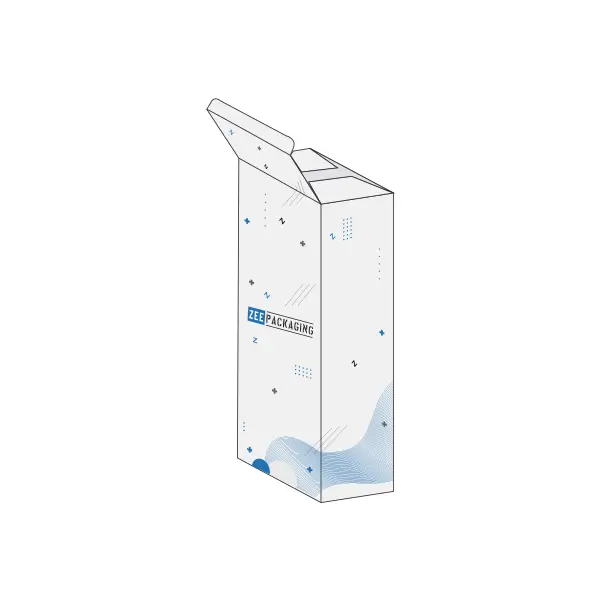
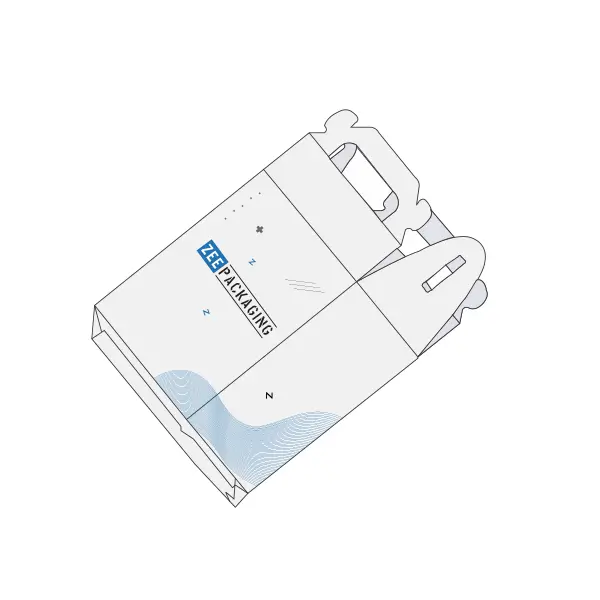
Custom Handle Bag Shape Box
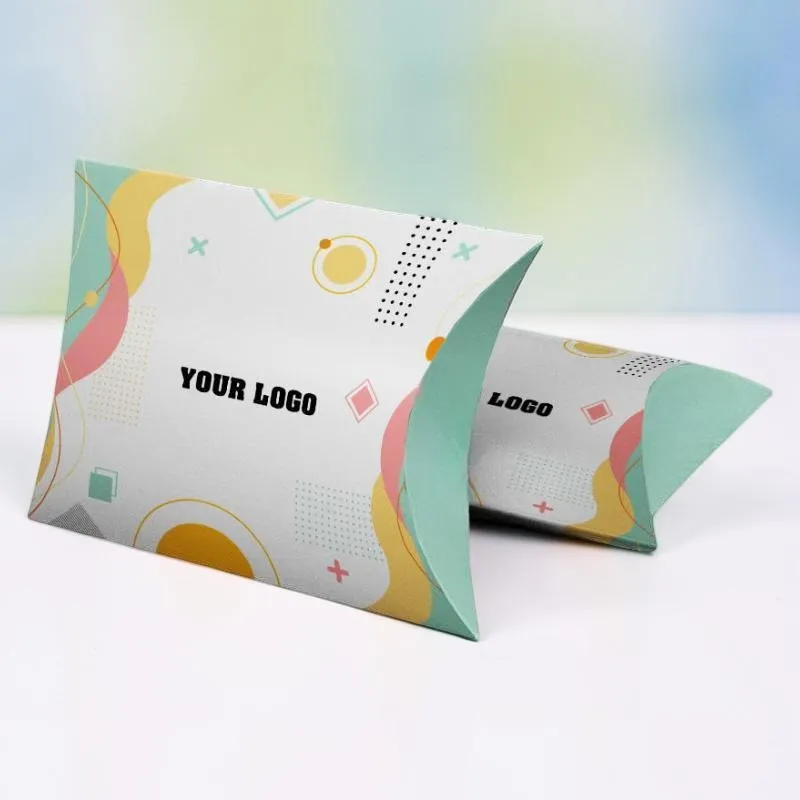
This format borrows the outline of a carrier bag and builds it in board that holds its shape. Curved shoulders, a handle at the top, and walls rigid enough that the contents stay protected rather than pressed against each other. It reads as a gift bag and behaves like a box. We produce a lot of handle bag shape box work at ZEE Packaging and the silhouette does most of the selling.
The Look Of A Bag, The Strength Of A Box
A handle bag shape box keeps its form when a bag would collapse.
- Curved top edges read immediately as a carrier bag
- Rigid walls protect contents rather than squeezing them
- It stands upright rather than slumping when set down
- The handle makes it carryable like a real bag
- Customers keep them, since the shape displays well
- It photographs beautifully for gifting and retail
Most brands choosing a handle bag shape box want the charm of a bag with contents that arrive intact.
Shaped Cutting And A Loaded Handle
Two production details decide whether it works.
- A shaped die costs more than a plain rectangular one
- That tooling is charged once, not per order
- Curved edges need a clean cut or they fray
- The handle area carries the entire load
- Reinforcement is essential wherever it is punched
- Nesting is less efficient, so board waste rises slightly
- Rigid handle bag shape box the premium version we run
- Folding carton version a lower cost option
- With a rope handle threaded through reinforced holes
- With a die cut handle punched through the board itself
- With a magnetic closure top flaps holding shut
- Mini favor size for weddings and events
Sizes We Print Regular
Every handle bag shape box is built to your contents, though these run often:
- 6" x 4" x 8" for a small gift
- 8" x 5" x 10" for a standard format
- 10" x 6" x 12" for a larger item
- 4" x 3" x 5" for a favor size
- 9" x 4" x 11" for a slim format
- 12" x 7" x 14" for a hamper style
Send us the loaded weight, since the handle specification follows entirely from it.
Board And Finish
- Rigid greyboard 36pt or 48pt with a litho printed wrap
- SBS C1S at 20pt to 24pt for a folding version
- Kraft board for a natural or artisan position
- Rope, ribbon or cotton tape handles
- Foil, spot UV and blind deboss on the wrap
- Printed interior, seen when the top opens
The handle is the only real failure point. We reinforce every punched hole as standard rather than treating it as an optional extra.
Materials Worth Choosing
- Recycled greyboard core beneath the wrap
- FSC certified stock, certificate available on request
- Soy based ink through the whole run
- Paper rope or cotton tape rather than plastic
- Aqueous coating instead of plastic lamination
- A box customers reuse, which avoids waste entirely
How Your Project Runs With Us
- 100 unit minimum, so a small brand can test the shape
- Free 3D mockup and flat proof before anything prints
- Free dieline drawn by our own designer
- Physical sample on request to test the handle under load
- Urgent turnaround at 5 to 8 business days
- Free shipping worldwide with nothing hidden
Frequently Asked Questions
Is the shaped tooling costly?
Less than most people assume, and charged once rather than per order. Across a few hundred units it barely registers.
Will the handle hold?
With reinforcement, yes. An unreinforced punch tears on the first carry, which is the failure we see most.
How much is a handbag-shaped box?
Rough estimate is $0.55 to $1.40 per unit for a folding version, $2.20 to $5.00 for rigid with a wrap and $3.20 to $7.00 for larger formats at moderate quantity. Tooling is a small one off. Shipping is included in our price. This is estimate only, so ask our team for a exact quote.
Rope or die cut handle?
Rope reads more premium and spreads the load. Die cut is simpler and cheaper to produce.
Does it ship flat?
The folding version does. Rigid arrives assembled, which takes more volume but feels considerably better.
Can the top close?
Yes, with magnetic flaps or a ribbon tie. Both keep contents secure while carrying.
Will the curves cut cleanly?
With a properly made die, yes. Fraying comes from a worn die rather than the shape itself.