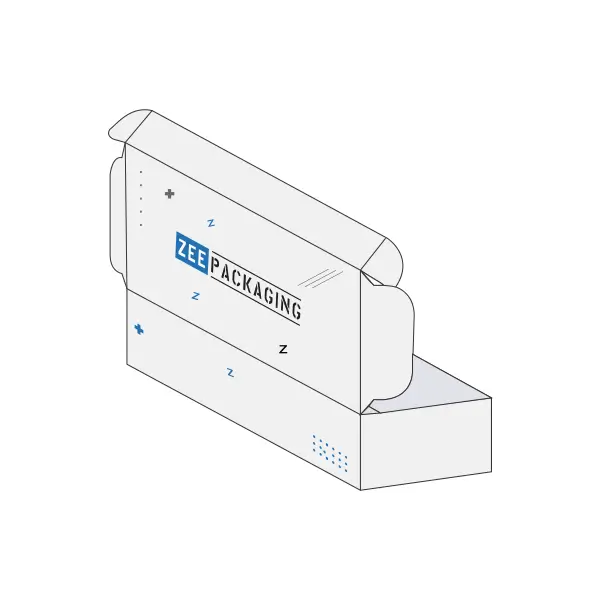
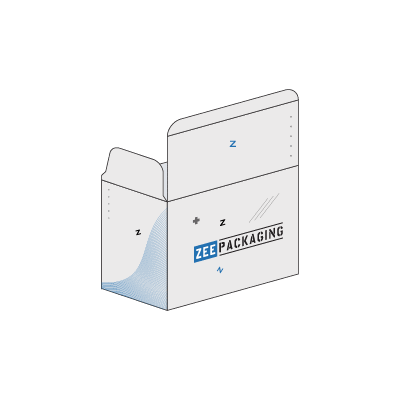
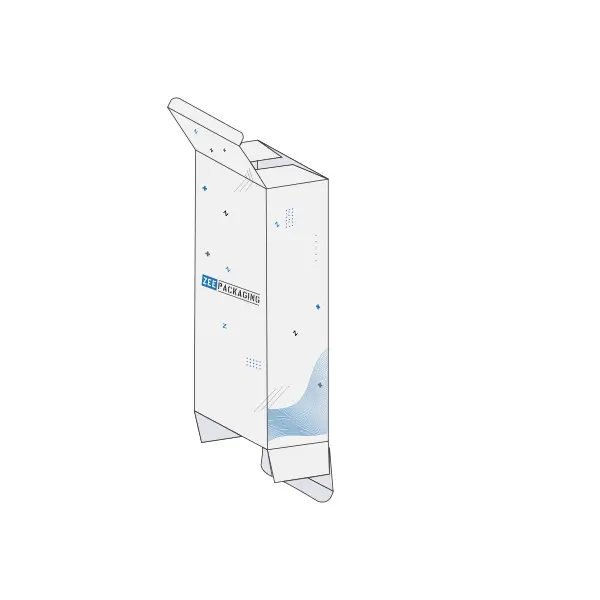
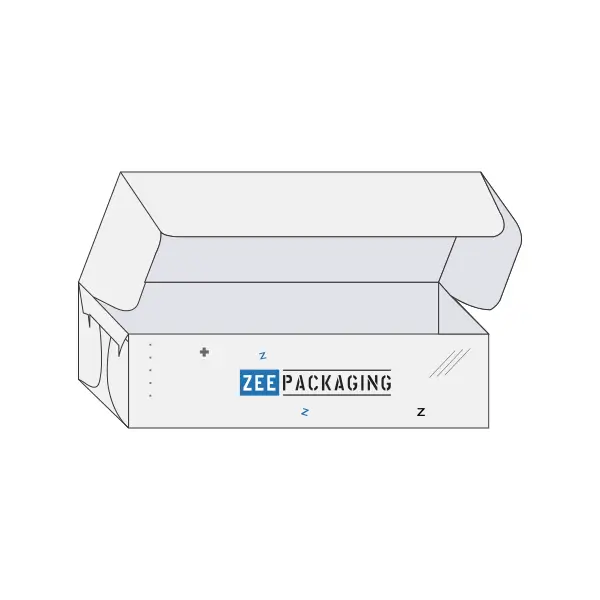
Custom Double Locked Wall Lid
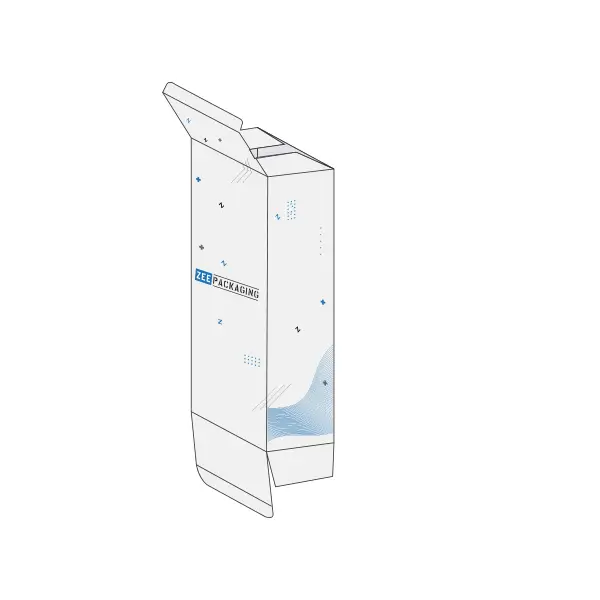
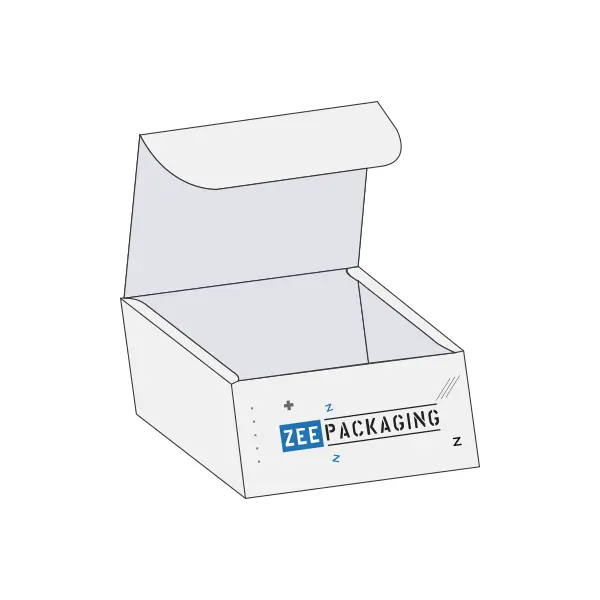
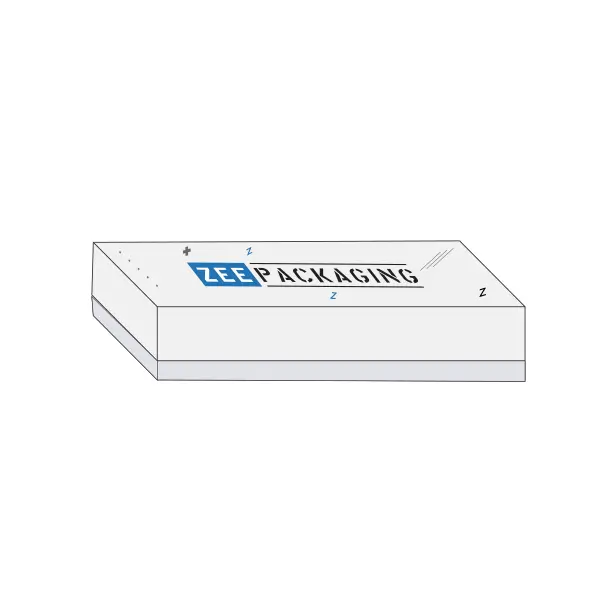
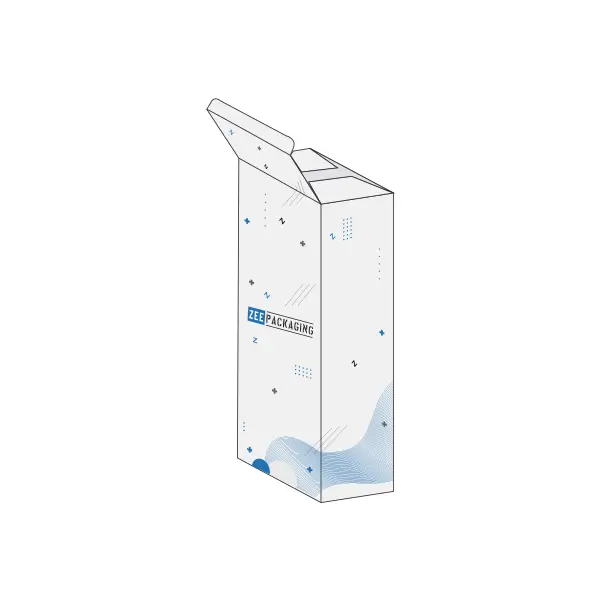
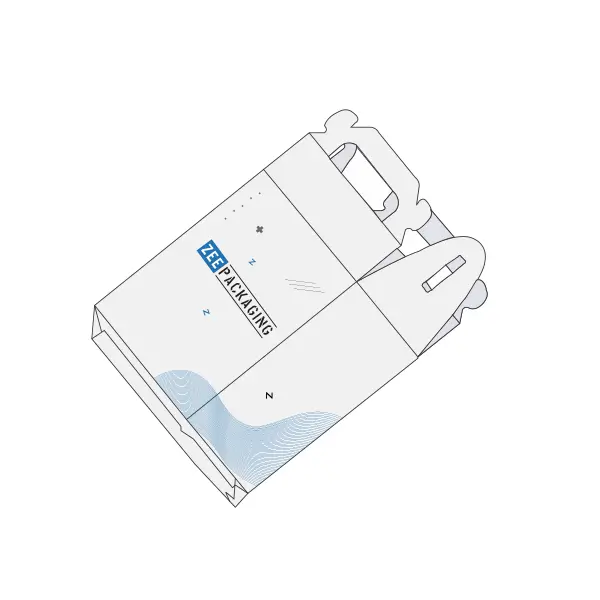
Some lids rely on glue and some rely on tabs. A double locked wall lid uses tabs on both wall layers, so the structure holds itself together mechanically at two points rather than one. No adhesive anywhere, and considerably more strength than a single locked build. We produce a lot of double locked wall lid work at ZEE Packaging and it suits operators who want strength without a gluing stage.
Locked Twice, Glued Never
A double locked wall lid holds through tension alone.
- Tabs fold into slots on both layers of the wall
- Two lock points per corner rather than one
- No adhesive used anywhere in the construction
- The lid holds square under repeated handling
- It ships flat with nothing pre glued
- It recycles as one piece with no glue residue
Most operators choosing a double locked wall lid want glued strength without paying for the gluing stage.
Tolerance Decides Everything
With no adhesive, the tabs do all the work.
- Too tight and staff struggle on every unit
- Too loose and the lock releases under load
- Board caliper changes how a tab behaves in a slot
- A ragged slot edge tears after a few assemblies
- Two locks mean two tolerances to get right
- We sample the fit physically rather than on paper
- Standard double locked wall lid the everyday build
- With a tear strip opening cleanly into a display
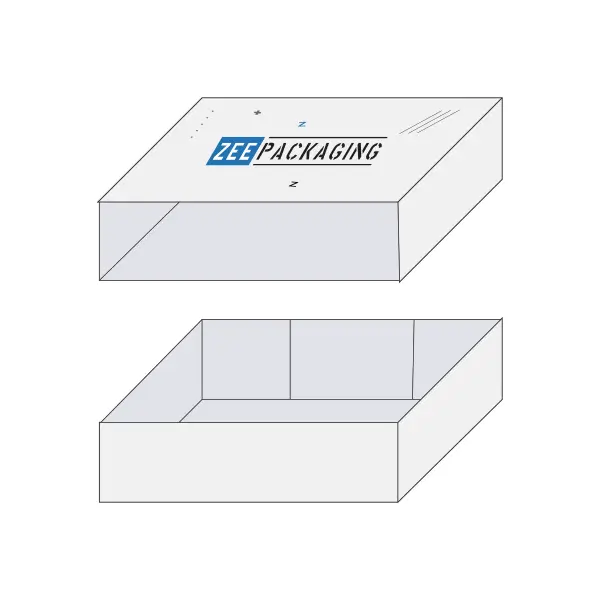
- Full depth lid covering the whole tray beneath
- Shallow lid showing the printed tray sides
- Window version showing product through a die cut
- Telescoping format adjusting to content height
Sizes We Print Regular
Every double locked wall lid is built to your tray, though these run often:
- 10" x 7" x 3" for a small counter format
- 12" x 9" x 4" for a standard unit
- 14" x 10" x 5" for a larger tray
- 8" x 6" x 3" for compact items
- 16" x 12" x 5" for a bulk format
- 12" x 12" x 4" for a square tray
Send us both the tray dimensions and the loaded height, since the lid is sized against the filled product.
Board And Print
- E flute corrugated for lighter applications
- B flute where the lid carries stacking weight
- SBS C1S at 20pt to 24pt for retail formats
- Litho laminated corrugated for full color print
- Kraft corrugated for a plain economical build
- Matte, gloss and soft touch lamination available
Board grade matters more here than on a glued lid. Softer board lets the tabs deform, which is what causes a lock to release in transit.
Materials Worth Choosing
- Recycled corrugated, standard across these grades
- FSC certified board, certificate available on request
- Soy based ink through the whole run
- No adhesive at all, keeping recycling completely clean
- No tape needed at assembly
- Right sizing so no board is wasted per unit
How Your Order Runs Through
- 100 unit minimum, so a small brand can test the format
- Free 3D mockup and flat proof before anything prints
- Free dieline drawn by our own designer
- Physical sample on request to test both locks under load
- Urgent turnaround at 5 to 8 business days
- Free shipping worldwide with nothing hidden
Frequently Asked Questions
What does a double locked wall lid cost?
Rough estimate is $0.55 to $1.40 per unit in plain corrugated, $0.90 to $2.20 with print and $1.60 to $3.60 for litho laminated at moderate quantity. Size moves it. Shipping is included in our price. This is estimate only, so ask our team for a exact quote.
How is it different to a single lock?
Two lock points per corner rather than one. That spreads the load and keeps the lid square considerably better.
Is it cheaper than a glued lid?
Usually, since there is no gluing stage. You trade a little assembly time for a lower unit price.
Will it hold in transit?
At the right board grade, yes. Locks release when the board is too soft or the tab engagement too shallow.
How long does assembly take?
A few seconds once staff learn the folds. Slower than a glued lid, faster than taping one shut.
Do we still need tape?
Not for the structure. Some operators add a tamper evident sticker, though the locks do not require it.
Can it have a tear strip?
Yes, so it opens cleanly into a display rather than being lifted off whole.