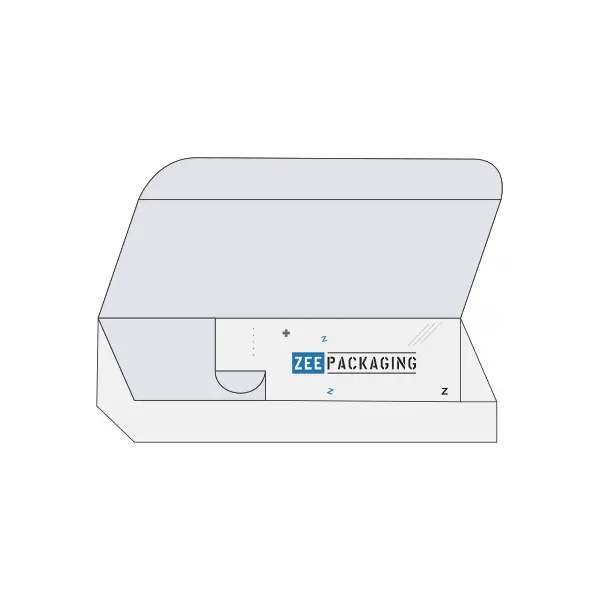
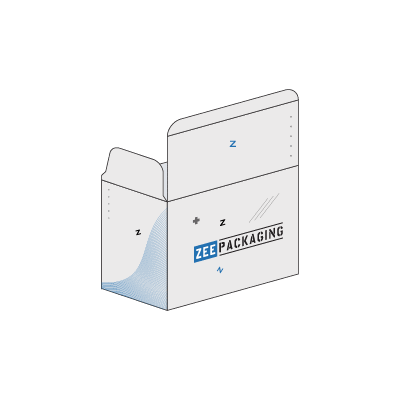
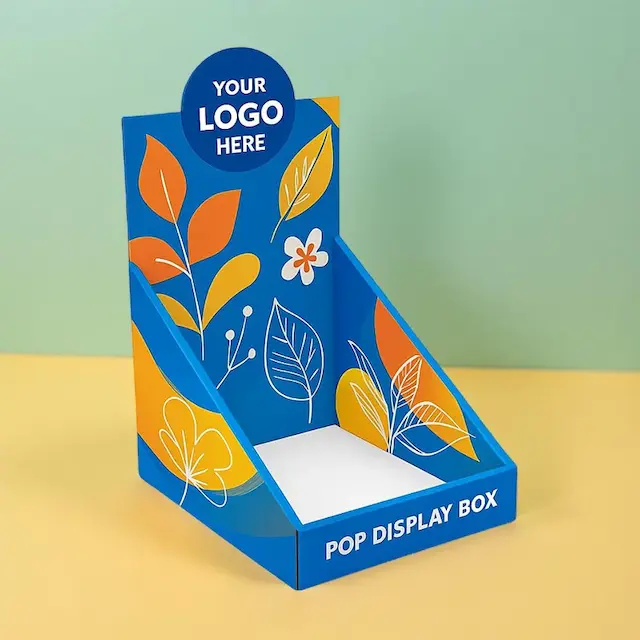
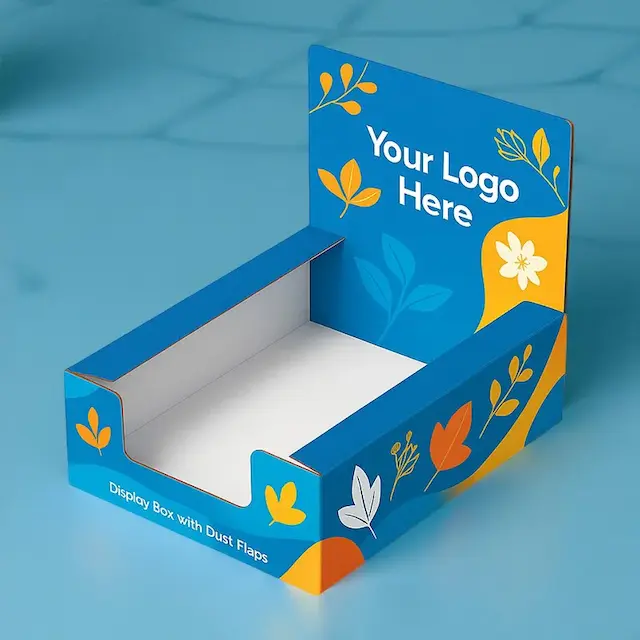
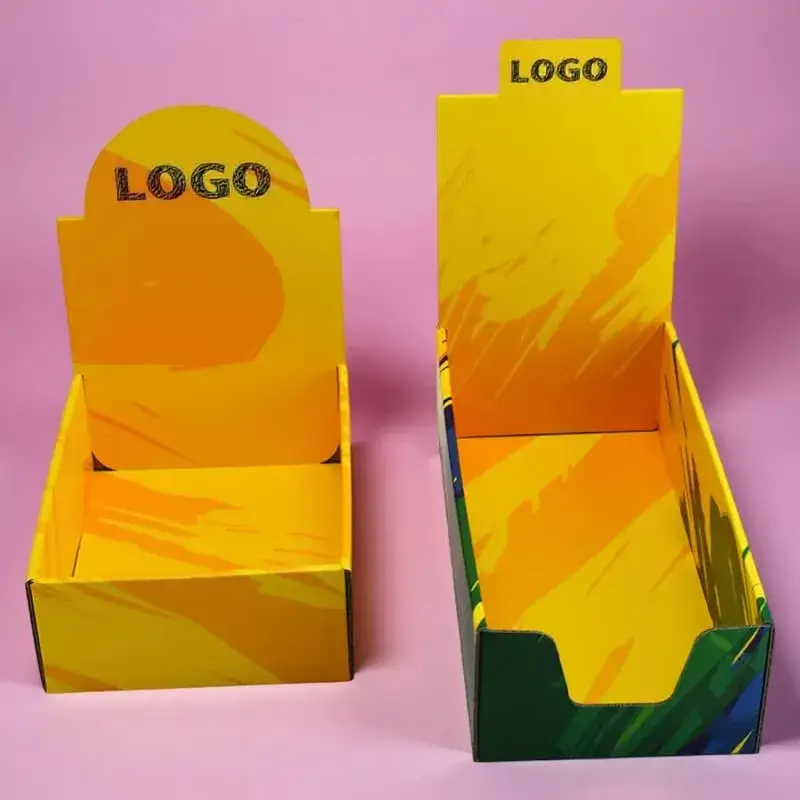
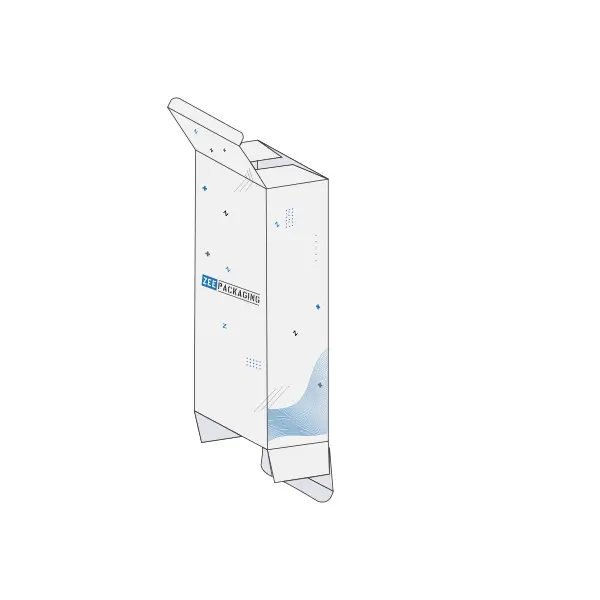
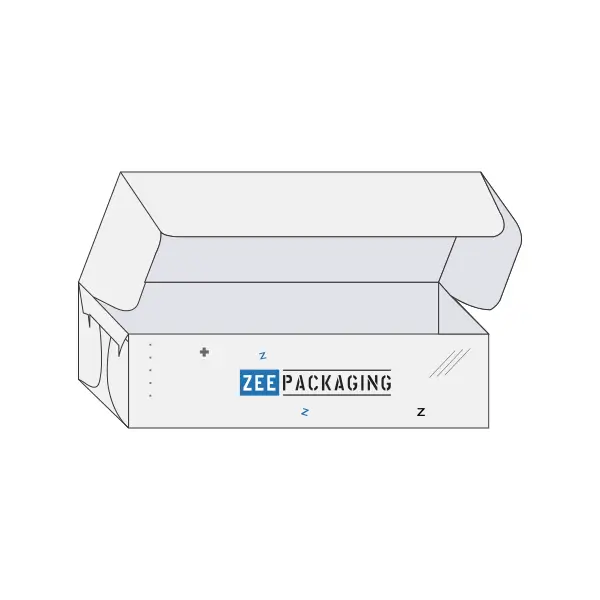
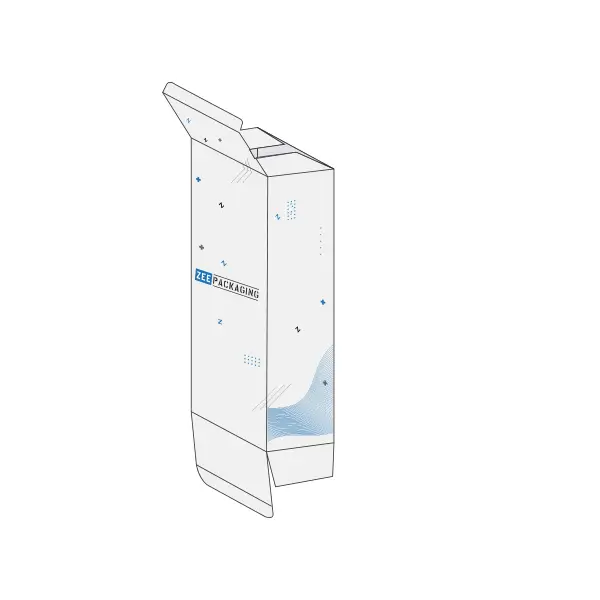
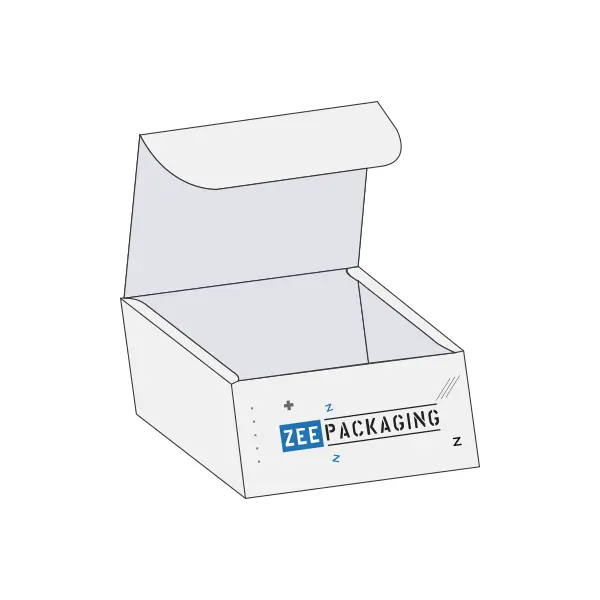
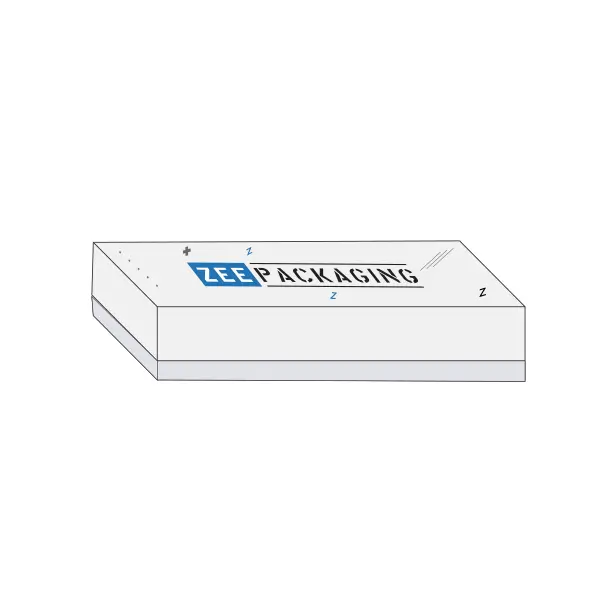
Custom Self-Locked Display Tray
A self locking tray holds its own shape through folded tabs rather than glue or tape. Nothing is applied during production and nothing is needed at your bench. Fold it, lock it, load it. For anybody assembling display units in volume, that removes a consumable and a step at once. We produce a lot of self-locked display tray work at ZEE Packaging and the simplicity is exactly what operators want.
Tabs Instead Of Adhesive
A self-locked display tray builds through its own structure.
- Tabs fold into slots and hold under tension
- No glue applied in production, so nothing dries or fails
- No tape needed at your packing bench
- The tray sits square rather than splaying under load
- It ships completely flat with nothing pre assembled
- It recycles as one clean piece with no adhesive residue
Most operators choosing a self-locked display tray do so after tallying what tape and glue actually cost them.
The Lock Has To Be Precise
Everything depends on how tab meets slot.
- Too tight and staff fight with every single unit
- Too loose and the lock releases under load
- Board caliper changes how the tab behaves in the slot
- A ragged slot edge tears after a few assemblies
- Heavier product needs deeper tab engagement
- We test the lock physically rather than trusting a drawing
- Four corner locked tray the standard self-locked display tray
- Front cut down version product visible from the front
- With a removable lid shipping sealed then opening out
- Tiered stepped format rows visible behind the front
- Divided tray compartments for several SKUs
- With a header card branding standing above the unit
Sizes We Print Regular
Every self-locked display tray is built to your product, though these run often:
- 10" x 7" x 3" for a small counter tray
- 12" x 9" x 4" for a standard display
- 14" x 10" x 4" for a larger unit
- 8" x 6" x 3" for compact items
- 16" x 12" x 5" for a bulk tray
- 12" x 12" x 3" for a square format
Send us the loaded weight, since the tab engagement follows from the load rather than the footprint.
Board And Print
- E flute corrugated for lighter counter trays
- B flute where the tray carries real weight
- Litho laminated corrugated for full color retail print
- Kraft corrugated for a plain economical build
- SBS C1S for a lightweight printed version
- Reinforced front lip so the tray holds shape
Board grade matters more here than on a glued tray. A softer board lets the tab deform, which is what causes a lock to release under weight.
Materials Worth Choosing
- Recycled corrugated, standard across these grades
- FSC certified board, certificate available on request
- Soy based ink through the whole run
- No adhesive at all, keeping the recycling stream clean
- One structure reused across several campaigns
- Right sizing so you ship product rather than air
How Your Order Moves Through
- 100 unit minimum, so a small brand can test the format
- Free 3D mockup and flat proof before anything prints
- Free dieline drawn by our own designer
- Physical sample on request to test the lock under load
- Urgent turnaround at 5 to 8 business days
- Free shipping worldwide with nothing hidden
Frequently Asked Questions
How fast does it assemble?
A few seconds once staff learn the fold. Slower than an auto bottom, considerably faster than taping a plain tray.
Will it hold under weight?
At the right board grade, yes. Locks release when the board is too soft or the tab engagement is too shallow.
Is it cheaper than a glued tray?
Usually, since gluing is a separate production stage. You trade a little assembly time for a lower unit price.
Do we need tape as well?
Not for the structure. Some operators add tape on a lid for tamper evidence, though the tray does not need it.
How much is a self-locked display tray?
Rough estimate is $0.50 to $1.30 per unit in plain corrugated, $0.85 to $2.10 with print and $1.50 to $3.40 for litho laminated at moderate quantity. Size moves it. Shipping is included in our price. This is estimate only, so ask our team for a exact quote.
Does it ship flat?
Completely, with nothing pre glued. Storage requirement is minimal as a result.
Should the inside be printed?
We would recommend it. Those inner walls show as product sells through and the tray empties.