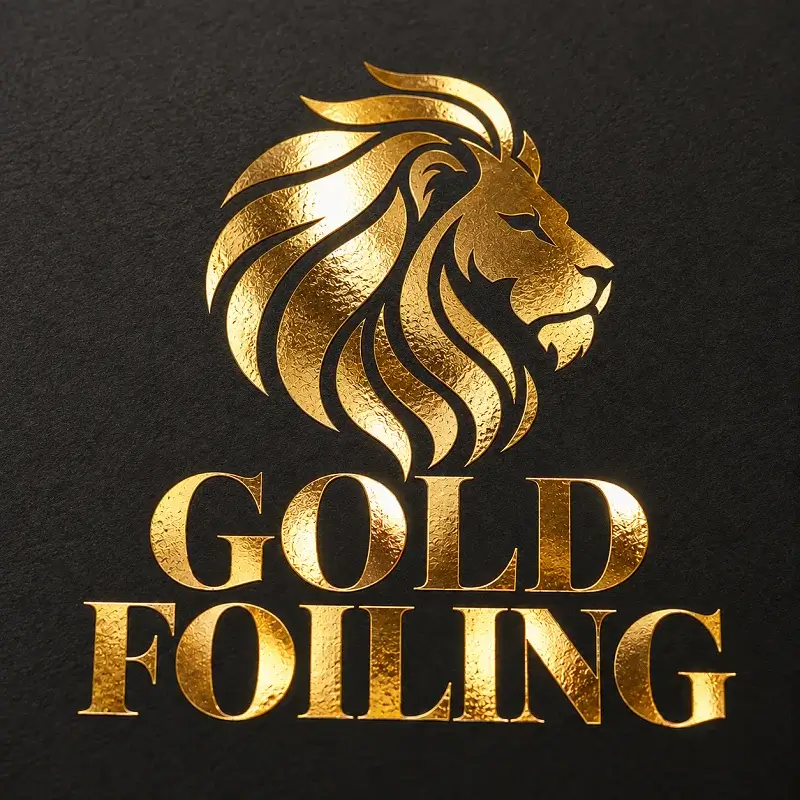
Custom Gold Foiling Boxes & Gold Foiling Packaging
Gold foiling is a heat and pressure process rather than a printing one. A metallic film transfers onto the board wherever a heated die presses, which is why it reflects like actual metal instead of looking like printed yellow. Nothing else produces that effect. We produce a lot of gold foiling packaging at ZEE Packaging and the process itself explains most of what clients ask about.
Heat And Pressure, Not Ink
A gold foiling box carries transferred metal rather than printed color.
- A heated die presses foil onto the board surface
- The foil releases from its carrier and bonds where pressed
- It reflects light the way metal does, which ink cannot
- The die is made specifically for your artwork
- Pressure means a slight impression is left behind
- Nothing printed can imitate the effect convincingly
Most brands specifying a gold foiling box have already tried a printed gold and found it read as mustard.
Design For The Foiling Die
Not every artwork transfers cleanly.
- Bold shapes and solid areas foil beautifully
- Very fine lines can break up or fill in
- Small text below six point rarely holds
- Large solid areas sometimes show pinholes
- Foil sits differently on textured board than smooth
- Matte or dark backgrounds give the best contrast
- Rigid lid and base the classic gold foiling box
- Magnetic closure box premium gold foiling packaging
- Folding carton a lighter, lower cost format
- Drawer slide box foiled detail on the outer sleeve
- Sleeve over a tray foil on the visible face only
- Foiled deboss foil and impression in one pass
Sizes We Print Regular
Every gold foiling box is built to your product, though these run often:
- 6" x 4" x 2" for a small gift
- 8" x 6" x 3" for a mid size item
- 3.5" x 3.5" x 1.5" for jewelry
- 10" x 8" x 3" for a curated set
- 4" x 4" x 4" for a candle or fragrance
- 12" x 9" x 3" for apparel
Foil And Board Options
- Bright gold for a traditional celebratory look
- Matte gold, which reads considerably more contemporary
- Champagne and rose gold for softer tones
- Antique gold for heritage and spirits brands
- Rigid greyboard 36pt or 48pt beneath a printed wrap
- Soft touch or matte lamination as the base surface
Restraint matters here. A small foiled logo on a plain matte wrap almost always reads more expensive than foil across the entire box.
The Honest Sustainability Picture
- Foil is a metallic layer, which complicates recycling
- Small foiled areas affect it far less than full coverage
- Blind deboss gives a premium cue with no foil at all
- Recycled greyboard core beneath the wrap
- FSC certified stock, certificate available on request
- Soy based ink through the whole run
Where recyclability is the priority, we would suggest a deboss rather than foil and say so plainly.
How Your Project Runs With Us
- 100 unit minimum, so a small brand can order properly
- Free 3D mockup and flat proof before anything prints
- Free dieline drawn by our own designer
- Physical sample on request, since foil never screens accurately
- Urgent turnaround at 5 to 8 business days
- Free shipping worldwide with nothing hidden
Frequently Asked Questions
Is there a die cost?
Yes, once per design, then reused on every reorder. It is modest and amortizes quickly across repeat runs.
Why not just print gold?
Because CMYK cannot reproduce reflectivity. Printed gold comes out as a flat mustard yellow rather than a metal.
How much is a gold foiling box?
Rough estimate is $0.45 to $1.20 per unit on a folding carton, $2.00 to $4.60 for rigid with a wrap and $2.80 to $6.50 for magnetic closure at moderate quantity. Foil coverage moves it. Shipping is included in our price. This is estimate only, so ask our team for a exact quote.
Bright or matte gold?
Matte reads more contemporary and premium. Bright gold suits traditional and festive work better.
How much foil is too much?
Usually less than people apply. A small foiled mark on a plain wrap outperforms full coverage almost every time.
Will fine detail hold?
Not below about six point. We would review the artwork and simplify before the die is made.
Does foil stop it being recyclable?
It complicates it. Restricting the foil to a small detail reduces the impact considerably.