Custom Partial Cover Boxes
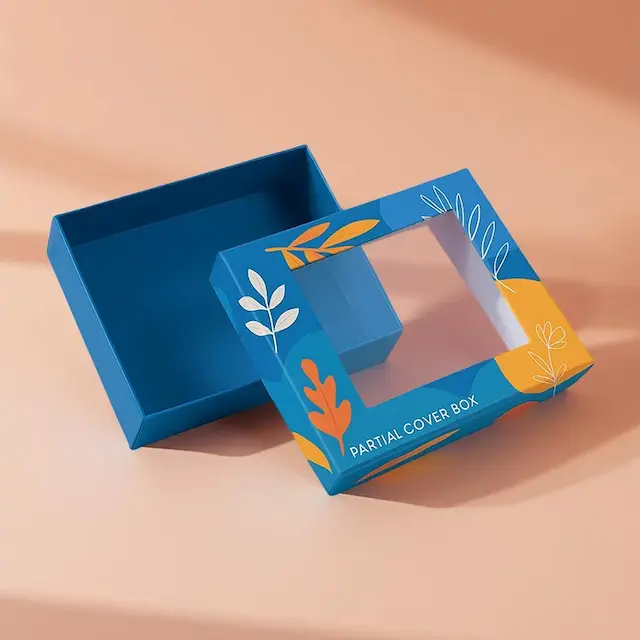
Wrapping a rigid box entirely in printed paper costs real money, and on plenty of designs it is not necessary. A partial cover wraps only part of the structure, leaving the greyboard exposed elsewhere. That contrast between raw board and printed paper has become a design language in itself. We produce a lot of partial cover box work at ZEE Packaging and the saving comes with an aesthetic upside.
Less Wrap, Deliberate Contrast
A partial cover box leaves board visible on purpose.
- Only part of the structure carries a printed wrap
- Raw greyboard shows on the remaining surfaces
- The contrast reads intentional rather than unfinished
- Less paper and less labor than a full wrap
- Minimal brands use it as a design choice rather than a saving
- Two textures on one box create visual interest
Most brands choosing a partial cover box like the look first and appreciate the cost second.
Where To Place The Wrap
The split line is the whole design decision.
- A band around the lid, leaving the base raw
- The top face only, with sides left exposed
- A vertical stripe running down one side
- The base wrapped with a raw lid, reversing the usual
- An asymmetric split for something more contemporary
- The wrap edge must be clean, since it is fully visible
- Lid and base with a partial wrap the standard partial cover box
- Banded lid a wrapped strip around the lid edge
- Top face wrap printed lid face with raw sides
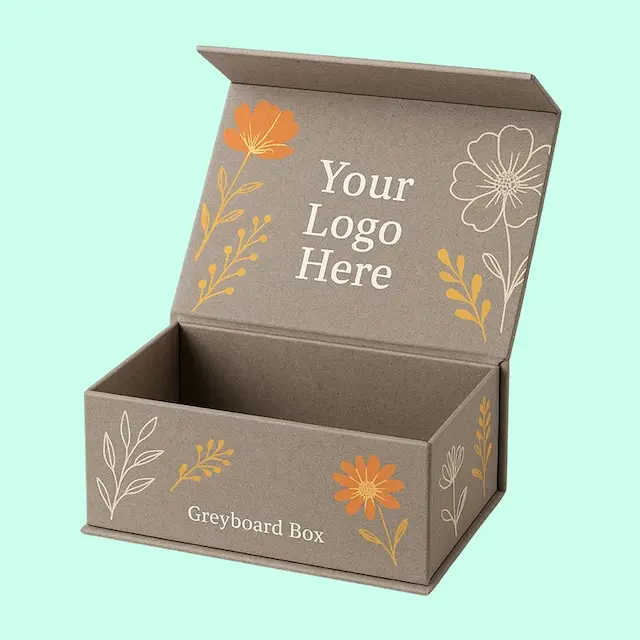
- Magnetic closure version partial wrap on a book style
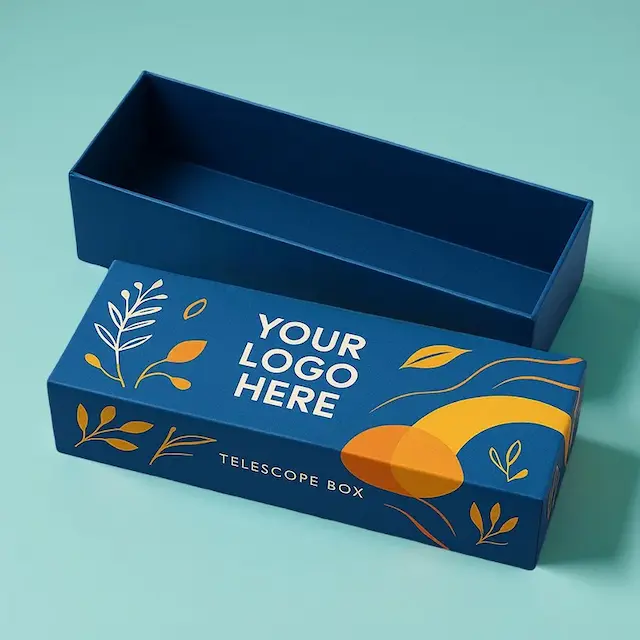
- Drawer slide wrapped sleeve with a raw tray
- Two tone construction different papers on lid and base
Sizes We Print Regular
Every partial cover box is built to your product, though these run often:
- 6" x 4" x 2" for a small gift
- 8" x 6" x 3" for a mid size item
- 10" x 8" x 3" for a curated set
- 4" x 4" x 4" for a candle or jar
- 3.5" x 3.5" x 1.5" for jewelry
- 12" x 9" x 3" for apparel
Board And Finish
- Rigid greyboard 36pt or 48pt as the visible structure
- Litho printed wrap on the covered areas
- Textured or uncoated papers for the wrapped section
- Blind deboss directly into the exposed greyboard
- Foil on the wrapped area for contrast
- Coated inner face where contents make contact
Debossing straight into the raw board is worth considering. It gives you branding on the exposed area without adding any wrap or ink at all.
Materials That Reduce Impact
- Less printed paper used than a full wrap
- Recycled greyboard, which is already recycled by nature
- FSC certified stock, certificate available on request
- Soy based ink on the wrapped areas only
- Exposed board needs no coating whatsoever
- Right sizing so no material is wasted per unit
This is one of the lower impact rigid options we offer, simply because less material goes onto the box in the first place.
What Working With Us Involves
- 100 unit minimum, so a small brand can order properly
- Free 3D mockup and flat proof before anything prints
- Free dieline drawn by our own designer
- Physical sample on request to judge the wrap edge
- Urgent turnaround at 5 to 8 business days
- Free shipping worldwide with nothing hidden
Frequently Asked Questions
Is it cheaper than a full wrap?
Usually, since less paper and less labor is involved. The saving depends on how much of the box you cover.
Does the raw board look unfinished?
Not when the split is deliberate. A clean wrap edge is what separates a design choice from a mistake.
Can we brand the exposed area?
Yes, with a blind deboss straight into the greyboard. It works beautifully and adds no material at all.
Which greyboard color shows?
The natural grey of recycled board. It varies slightly between batches, which is part of the character.
Will the wrap edge lift?
Not when turned properly. The edge is visible here, so it gets more attention than on a fully wrapped box.
How much is a partial cover box?
Rough estimate is $1.40 to $3.40 per unit for a standard format, $2.20 to $5.00 for larger sizes and $2.60 to $6.00 with magnetic closure at moderate quantity. Wrap area moves it. Shipping is included in our price. This is estimate only, so ask our team for a exact quote.
Can lid and base use different papers?
Yes, and it works well. Two tone construction is one of the more interesting things this format allows.
Can we trial one design?
That is exactly what the 100 unit minimum is there for. Check the edge and the contrast, then order in volume.