Custom Sushi Boxes & Sushi Packaging
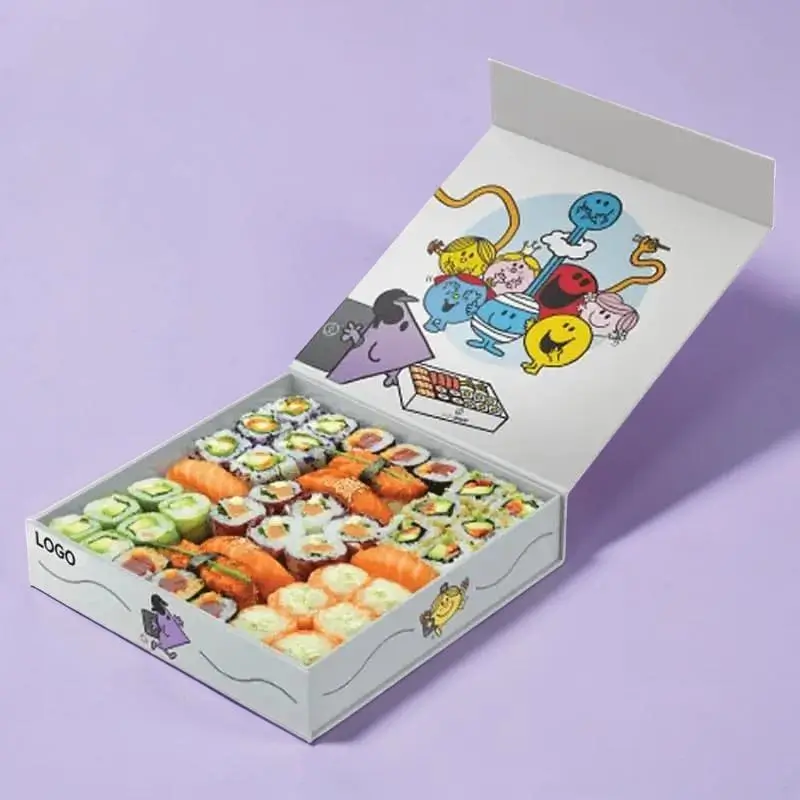
Sushi is arranged food. The chef places every piece deliberately and the whole appeal collapses if those pieces slide into each other on the way to a customer. It is also chilled, delicate and eaten with the eyes first. We produce a lot of sushi packaging at ZEE Packaging and keeping the arrangement intact is the entire brief.
The Arrangement Is The Product
A sushi box has to hold pieces exactly where they were placed.
- Snug internal dimensions so nothing slides in transit
- A compartment or divider for mixed selections
- The nori softens if it sits against wet rice for too long
- Never stack pieces on top of each other
- Depth so the lid does not press down on the toppings
- A clear lid, since sushi sells almost entirely on appearance
Most complaints we hear about sushi packaging are pieces that arrived collapsed into one corner.
Chilled And Delicate
Cold storage adds its own complications.
- Condensation forms in a chiller and softens uncoated board
- A coated inner face wherever rice makes contact
- Soy sauce and wasabi need separate sealed compartments
- Ginger releases moisture, so keep it apart from the nori
- Rice hardens if kept too cold, which the pack cannot fix
- A window or clear lid must resist fogging
- Tray with a clear lid the standard chiller sushi box
- Compartment tray for mixed selections with sides
- Long narrow tray single roll and maki formats
- Deep tray for chirashi and rice bowl style dishes
- Platter format sharing and catering sushi packaging
- Sauce and ginger wells built into the tray
Sizes We Print Regular
Every sushi box is built to your menu, though these run often:
- 7" x 5" x 1.5" for a standard selection
- 9" x 4" x 1.5" for a single roll
- 8" x 6" x 2" for a mixed platter with sides
- 6" x 4" x 2.5" for a rice bowl format
- 11" x 8" x 2" for a sharing platter
- 14" x 10" x 2" for a catering tray
Measure your tallest piece, since a topped nigiri sits considerably higher than a maki roll.
Board And Food Safety
- Food grade certified stock, always, without exception
- Coated inner face for rice contact and chiller condensation
- White SBS for a clean presentation, which suits this category
- Kraft board for a more natural or artisan position
- 20pt to 24pt, since a loaded tray carries weight
- Grease resistant treatment where tempura or fried items are included
Kinder Material Choices
- Board tray replacing plastic entirely, which is the big shift here
- Compostable clear film in place of PET lids
- Recycled board where food grade permits it
- FSC certified stock, certificate available on request
- Soy based ink through the whole run
- Right sized sushi packaging so pieces sit snug rather than loose
Plastic replacement is what most sushi operators come to us for, and a coated board tray handles the job well.
How An Order Runs With Us
- 100 unit minimum, so a single counter can order properly
- Free 3D mockup and flat proof before anything prints
- Free dieline drawn by our own designer
- Physical sample on request to test with a real selection
- Urgent turnaround at 5 to 8 business days
- Free shipping worldwide with nothing hidden
Frequently Asked Questions
How do we stop pieces sliding?
Size the tray to the arrangement rather than rounding up. A tray that is even slightly generous lets everything shift into one corner.
Will the lid fog in a chiller?
It can. Anti fog film handles it far better, and it matters here since the whole sale depends on seeing the sushi.
How much is a sushi box?
Rough estimate is $0.25 to $0.70 per unit for a standard tray, $0.45 to $1.20 for a compartment format and $0.90 to $2.20 for a catering platter at moderate quantity. Lid type moves it. Shipping is included in our price. This is estimate only, so ask our team for a exact quote.
Can we avoid plastic entirely?
Largely, yes. A board tray with a compostable film lid gets you most of the way, though a fully clear lid is the hardest part.
Do soy and ginger need separate wells?
They do. Ginger releases moisture and soy leaks, and both will ruin the nori if they sit against it.
Will condensation soften the tray?
On uncoated board, yes. A coated inner face handles chiller conditions without going limp.
Is the board food safe?
Always. We only run food grade certified stock for anything holding food.