Custom Flexible Packaging
Rigid packaging protects by resisting force. Flexible packaging protects by controlling what reaches the product, which is a completely different approach. Oxygen, moisture, light and aroma all get managed through the film structure rather than through board thickness. We produce a lot of flexible packaging at ZEE Packaging and the barrier specification is where every project starts.
Barrier Is The Real Product
Flexible packaging protects chemically rather than structurally.
- Oxygen ingress is what makes food go rancid
- Moisture transfer ruins powders, coffee and snacks
- Light degrades many products faster than air does
- Aroma loss matters enormously in coffee and spices
- The film structure determines all of it
- Shelf life follows directly from the barrier chosen
Most flexible packaging problems we get asked to solve are a barrier that was underspecified for the product.
Structures And What They Do
Films get laminated together to combine properties.
- PET outer for print quality and strength
- Aluminum foil layer for a near total oxygen barrier
- Metallized PET as a cheaper barrier alternative
- Polyethylene inner for heat sealing
- Kraft paper outer where a natural look matters
- Mono material structures for improved recyclability
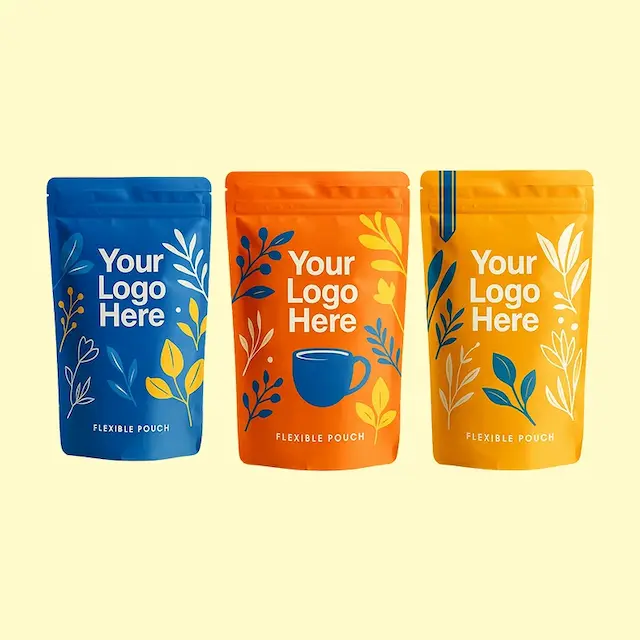
- Stand up pouch the most requested flexible packaging format
- Flat bottom pouch better shelf presence and stability
- Side gusset bag traditional for coffee
- Flat pouch sachets and single serve
- Spouted pouch for liquids and purees
- Roll stock film for automated filling lines
Sizes We Print Regular
Every pouch is built to your fill, though these run often:
- 100g stand up pouch for coffee and tea
- 250g pouch for snacks and dry goods
- 500g pouch for larger fills
- 1kg pouch for bulk and protein powders
- 50ml to 500ml spouted pouches
- Sachet formats for single serve
Fill weight and product density both matter, since a light bulky product needs a larger pouch than the weight suggests.
Print And Finish
- Rotogravure printing for high volume runs
- Digital printing for shorter runs and variable designs
- Matte, gloss or soft touch finishes
- Spot matte over gloss for contrast
- Metallic effects through the film structure
- Windows and clear panels showing the product
Digital printing has changed this category considerably. Short runs that were once uneconomical are now practical, which suits smaller brands well.
Recyclability Honestly Assessed
- Mono material PE structures, which recycle in existing streams
- Recycled content films where available
- Compostable structures for the right products
- Paper based laminates with a thin barrier layer
- Soy based ink through the whole run
- Right sizing so less film is used per unit
Multi layer laminates deliver the best barrier and the worst recyclability. Mono material has improved a great deal, though it does not yet match foil on oxygen protection, and we would say that plainly.
How An Order Runs With Us
- 100 unit minimum, so a small brand can launch
- Free 3D mockup and flat proof before anything prints
- Free artwork setup by our own designer
- Physical sample on request to test the seal and fit
- Urgent turnaround at 5 to 8 business days
- Free shipping worldwide with nothing hidden
Frequently Asked Questions
Which barrier do we need?
It depends on the product and the shelf life you want. Send us both and we specify the structure rather than guessing.
Can it be recyclable?
Mono material structures can be. Foil laminates give a better barrier but complicate recycling, so there is a genuine trade off.
How much does flexible packaging cost?
Rough estimate is $0.08 to $0.25 per pouch for a simple structure, $0.15 to $0.40 with a foil barrier and $0.25 to $0.60 for spouted formats at moderate quantity. Volume moves it substantially. Shipping is included in our price. This is estimate only, so ask our team for a exact quote.
Do you add zippers and valves?
We do. Resealable zippers for multi use products, one way valves for freshly roasted coffee.
Is digital printing worth it?
For shorter runs and multiple SKUs, definitely. It removes plate costs, which dominate small rotogravure runs.
Can you do compostable pouches?
We can, though barrier performance is lower and shelf life shortens. It suits some products better than others.
Do we need a window?
Only where the product sells on appearance. Windows reduce the barrier slightly, so we would weigh it up with you.